
Let's talk about the sexless phase nobody warns you about
You know what nobody mentions in relationship advice? How normal it is to stop having sex. Not because something's broken. Not because you don't love each other. But because life got loud, or stressful, or both.
Work piled up. Kids happened. Illness hit. Resentment crept in through the cracks. And one day you look at your calendar and realize it's been four months. Then six. Then you stop counting because it hurts too much to know.
Here's the thing: sexless phases are shockingly common. And here's the harder thing: they tend to snowball. The longer you don't touch each other, the weirder it becomes to start again. The pressure builds. And pressure kills desire faster than anything else.
Why sexless phases happen (and it's rarely what you think)
Most couples assume a sexless phase means someone's not attracted anymore. That's almost never the real story.
What actually happens is this: one person stops initiating. Maybe they're exhausted. Maybe they're hurt about something unrelated to sex. Maybe they assume you're not interested. And the other person, picking up on that shift, stops initiating too. Within weeks, you've both normalized the absence of touch. Your nervous systems have downgrades the priority. And restarting feels impossibly awkward.
I've worked with hundreds of couples in this exact position. The research backs it up. Relationship therapist Harriet Lerner found that couples who experience a "touch famine" often struggle to reconnect not because desire is gone, but because the vulnerability of restarting feels riskier than staying numb.
Adding a tool like a lemon vibrator into the mix changes the equation entirely. It's no longer about proving you still want your partner. It becomes about play. Exploration. Permission.
Why lemon vibrators are different in a relationship context
Let me be specific about what makes lemon vibrators useful here instead of, say, just "trying harder" or "scheduling sex."
Lemon vibrators do something psychological that's genuinely powerful. Because they're not about your partner. They're not about proving anything. They shift the energy from performance anxiety to curiosity.
When you and a partner are in a sexless phase, sex carries weight. It's loaded with meaning. It's proof of connection, or evidence of disconnection, depending on how you frame it. That weight makes it impossible to relax into.
But a clitoral vibrator like the Lem? It's funny. It's easier. It's collaborative without being demanding. One partner can use it while the other watches. You can both use it together. You can laugh at it. And laughing together is the fastest way back to trust.
The physical part matters too. Clitoral vibrators create sensation that's different from partnered sex. That difference is valuable when you're trying to rebuild touch after months or years without it. You're not comparing it to the way things used to be. You're creating something new.
The communication piece (the part that actually matters)
Here's where most couples get it wrong. They bring a lemon vibrator or any adult toy into the bedroom without ever having the actual conversation.
That doesn't work. It just makes the toy feel like a bandage on a bigger wound.
What needs to happen first is this: you both need to acknowledge that the phase happened. Not to blame each other. But to name it. "We stopped touching each other. I miss that. I want to figure out how to start again, and I'm nervous about it."
Then, separately, you talk about what reconnection might look like. Not necessarily sex. Touch first. Kissing. Slow exploration. No goal beyond enjoying each other's presence.
Then you introduce the toy as part of that conversation, not as a surprise. "I found this thing I think could be fun. Would you be interested in exploring it together?" The ask itself is vulnerable. That vulnerability is where real connection starts.
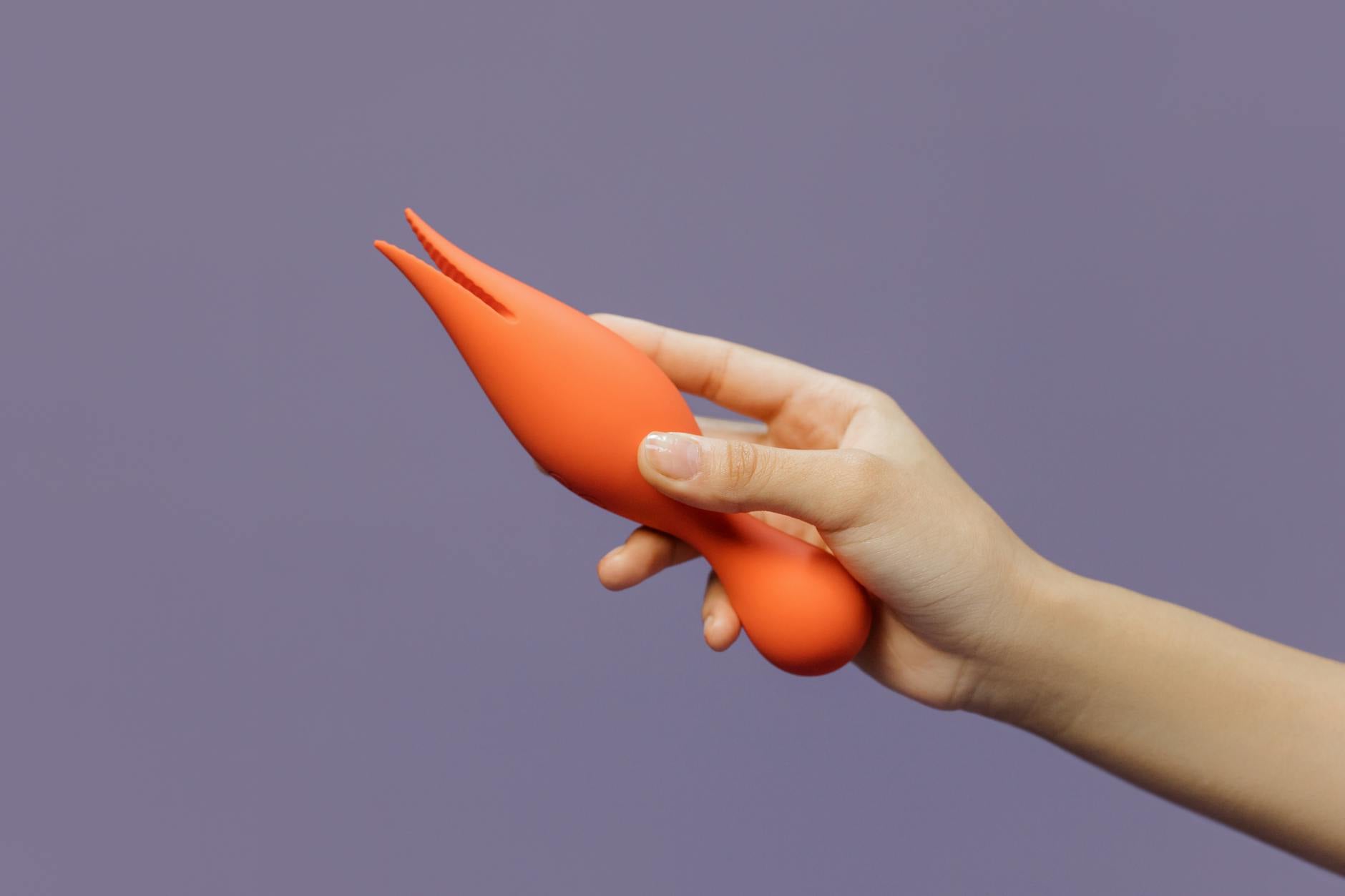
Photo by cottonbro studio on Pexels
How to actually introduce a lemon clitoral vibrator into the reconnection process
Timing matters. Don't try this when you're angry, or rushing, or when one of you is stressed about work. Reconnection needs space.
Start small. The first time, you might just show the toy to each other. Hold it. Talk about it. No pressure to use it immediately.
When you do use it, remove the expectation of orgasm. That sounds counterintuitive for a pleasure device, but the goal here is sensation, not outcome. Turn it on. Explore. Feel what it does. Notice what feels good.
If you're using a lemon vibrator together, one partner might use it while the other touches them differently. Or takes turns. Or watches. The specific arrangement matters less than the collaborative energy.
One thing I always tell couples: the toy isn't a replacement for your partner's touch. It's a permission structure. It says, out loud, "Pleasure matters. Touch matters. I want to be present with you in this." That message is what rebuilds the connection, not the device itself.
What happens next (the part people don't expect)
Here's what I've seen happen over and over. A couple in a sexless phase brings a lemon clitoral vibrator into the mix. They use it together a few times. And then something unexpected occurs: they start touching each other more. Without the toy. Without planning. Just because the nervous system has been reminded that touch is safe again.
The vibrator created momentum. It broke the spell of numbness. And then something deeper started moving on its own.
This doesn't happen every time. If there's underlying resentment or betrayal, a toy won't fix that. But for couples whose sexless phase was driven by burnout, stress, or simple habit, reconnecting through play with a lemon vibrator often becomes the turning point.
When you need more than a toy
Let's be honest. Sometimes a sexless phase is a symptom of a much bigger problem. If the disconnection is rooted in infidelity, contempt, or fundamental incompatibility, a vibrator isn't the answer.
But if the sexless phase happened because life got in the way, or because you both stopped trying, or because you're scared to be vulnerable again, then yes. A tool like a lemon vibrator can genuinely help.
The real work, though, is the conversation. The willingness to say "I miss touching you" and mean it. The decision to prioritize each other's pleasure again. The toy is just the vehicle for that intention.
FAQ: Lemon Vibrators and Relationship Reconnection
Why would using a vibrator help a sexless marriage more than just trying to have sex again?
Because pressure kills desire. When you try to force yourself back into regular sex after a long absence, you're often running on obligation, not genuine interest. That obligation becomes obvious to your partner, and it makes the whole experience feel worse for both of you. A clitoral vibrator shifts the frame from "proving we're connected" to "playing together." The low-stakes exploration often feels less threatening than performance-based sex, which makes it easier to actually relax and reconnect physically.
Is it weird to introduce a lemon vibrator to my partner if we've never used toys before?
It feels weird before you do it. The conversation itself is the hardest part. But most partners respond well when the framing is right. Lead with vulnerability: "I've been thinking about how much I miss being intimate with you, and I want to figure out a way that feels good for both of us. I found something I think could be fun to explore together. Would you be interested?" That honesty matters way more than the object itself.
Can a vibrator actually fix a sexless relationship, or is it just a temporary fix?
A vibrator can't fix a broken relationship, but it can help jumpstart physical reconnection if the disconnection was caused by habit, stress, or avoidance rather than deeper incompatibility. Think of it as permission to touch again. Once that permission is there and the nervousness settles, many couples find that physical intimacy naturally follows. But if the sexless phase is rooted in resentment, betrayal, or a fundamental mismatch in desires, you'll need to address those issues directly, possibly with a couples therapist.
Should both partners be enthusiastic about using a toy together, or is it okay if one person is more interested?
Mutual enthusiasm helps, but mutual openness is what matters most. One person might be more excited about the toy itself, and that's fine. What matters is that both people are curious about reconnecting physically. If one partner is actively resistant, forcing the issue will backfire. Start with the conversation about rebuilding touch in general. The toy is optional. The willingness to try is not.
How often should we be using a lemon vibrator if we're trying to rebuild intimacy?
There's no set frequency. Some couples find that using a clitoral vibrator once or twice a week helps rebuild the habit of physical connection. Others use it more casually, whenever they feel like playing. The point isn't the toy itself but the reconnection it enables. Don't let it become another obligation. If it feels like a chore, you're doing it wrong. The goal is pleasure, which means play. And play only works when it doesn't feel like homework.
What if my partner thinks using a vibrator means they're not enough for me?
This is a common fear, and it deserves a direct conversation. A lemon vibrator isn't a replacement for your partner. It's an addition. You might say something like: "I want to find ways for us to feel good together. This is about us exploring pleasure as a team, not about me preferring something to you." If your partner remains insecure about it, that's worth exploring together, either in conversation or with a therapist. But the insecurity is usually about the bigger disconnection, not actually about the toy.
The thing about starting again
Reconnecting after a sexless phase is awkward. It's vulnerable. It requires admitting that you've been disconnected and that you want to change that. There's no way around the discomfort.
But here's what I know from working with hundreds of couples: the ones who make it through that discomfort come out with stronger relationships. Not because the sex gets better (though it often does). But because they've reminded each other that they matter. That touch matters. That pleasure matters.
A lemon vibrator is just a tool. The real work is the conversation, the vulnerability, the decision to show up for each other again. But sometimes, that tool makes the decision easier. And sometimes easier is exactly what you need to begin.
If you're in a sexless phase and wondering how to start again, the first step isn't buying anything. It's telling your partner the truth: "I miss us. I want to find our way back." Everything else follows from there.
Ready to explore this further? Whether you're working through reconnection alone or with a partner, our team at Hello Nancy is here to support your journey. Reach out if you have questions or want personalized guidance on rebuilding intimacy.