Let's talk about desire disappearing when your relationship changes
Your desire doesn't actually vanish after a breakup or a major relationship shift. What happens is more subtle and harder to name. The arousal that used to happen automatically around another person stops. Your body, which was trained to respond to their touch or their presence, goes quiet. And then you panic because you wonder if you've broken something, or if pleasure was only ever tied to them.
It wasn't.
What actually happens to desire during relationship transitions
When you're in a long relationship, arousal becomes collaborative. Your body learns to respond to their cues, their timing, their touch. The neural pathways that fire during sex are shaped around another person's presence. When that person leaves or the relationship changes, those pathways don't vanish. They just go dormant.
This is different from actual loss of desire. Actual loss would feel like indifference across all contexts. What you're experiencing is context-dependent arousal disconnection. Your body learned to turn on for them. Now you need to teach it to turn on for you.
There's also the psychological layer. If the relationship ended badly, your body might associate arousal with pain. If it was a good relationship that simply ended, there's often grief underneath the silence. If you've transitioned into a new relationship, you're grieving the familiar and trying to build new arousal pathways simultaneously. Your nervous system is working overtime, and arousal is the first thing to shut down when your nervous system is busy protecting you.
Why lemon vibrators are different for rebuilding desire
Most vibrators work through direct stimulation and escalation. They buzz faster, you respond faster, orgasm follows. That's useful when your body already knows the map. When desire has gone quiet, you don't need faster. You need presence.
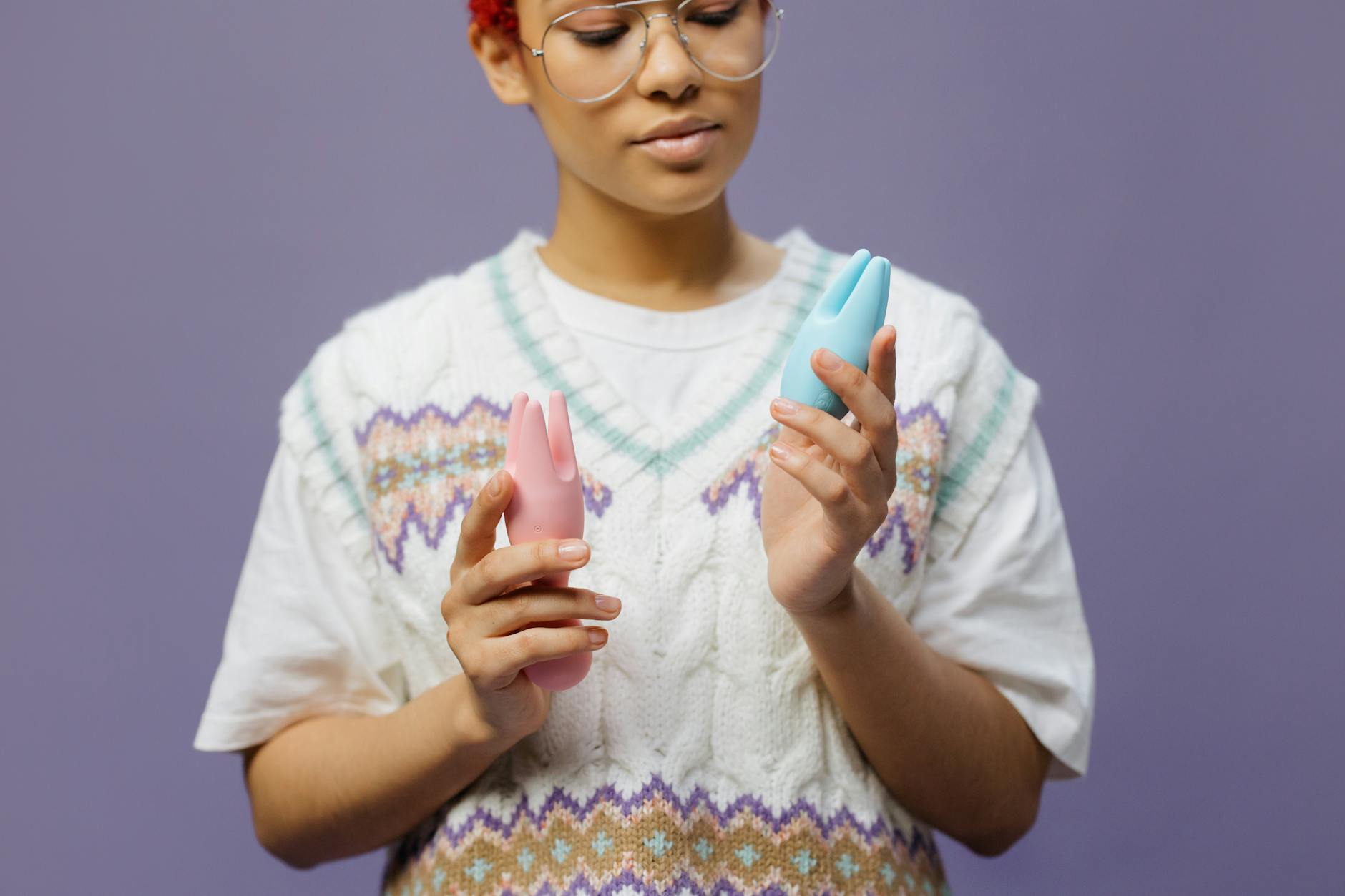
Lemon vibrators work through suction and rhythmic stimulation instead of pure vibration. This mimics the sensation of oral sex more closely than traditional vibrators do. Why does that matter for desire rebuilding? Because suction requires slower, longer engagement. You can't rush it. The stimulation is sustained and consistent, which means your nervous system has time to settle and then respond.
The Lem vibrator uses a pattern-based approach too. You start at pattern 1 or 2, which is delicate. You're not assaulting your body with intensity. You're asking it questions gently and waiting for answers. That's the opposite of what most people do when they're trying to force desire back online.
The specific role of self-touch in desire reconnection
Here's what I see in my practice over and over: when you use a lemon vibrator alone, you're not just pursuing an orgasm. You're rebuilding a conversation with your own body. You're saying, "I'm still here. You're still here. Let's try this again."
That conversation is crucial in ways that partnered sex often isn't. With a partner, there's negotiation and accommodation. With yourself, there's only honesty. You feel what actually feels good, not what you think should feel good. You go slowly, not because you're trying to impress anyone, but because slow is what your body needs.
This is particularly important if the relationship change involved infidelity, coercion, or a significant breach of trust. Your body might have protective numbness built into it. Lemon vibrators don't force through that numbness. They create a space where your body can gradually feel safe enough to respond again.
Four ways to use lemon vibrators during desire rebuilding
Start with exploration, not goals. Don't use the toy thinking "I need to orgasm." Use it thinking "What does this feel like?" Start at the lowest setting. Spend 10 minutes just feeling the sensation. If nothing happens, that's information, not failure. Do this daily for a week before you expect any arousal response.
Build a ritual around it. Shower beforehand. Light a candle. Put your phone in another room. This isn't indulgence. It's nervous system regulation. Your body learns that this time and space are safe. Ritual communicates safety better than forcing yourself to relax.
Use fantasies, not obligation. Let your mind wander. Think about past good sex, imagined scenarios, anything that feels warm. Don't judge what turns you on. Fantasy is private. It's where desire lives before it becomes physical.
Track what shifts. After two weeks of consistent self-touch with a lemon vibrator, notice small changes. Are you thinking about pleasure more? Is your body responding faster? Are you waking up aroused? These micro-shifts matter more than orgasm frequency.
The difference between rushing desire and respecting the timeline
If you're three weeks out from a breakup, you probably don't need a lemon vibrator yet. You need rest. Your nervous system is flooded with stress hormones. If you try to force arousal right now, your body will learn that self-touch is another chore, another thing you're failing at.
But if you're two months out and desire is still completely absent, that's when self-touch with a dedicated tool becomes useful. Your nervous system has stabilized enough to feel pleasure. You're ready to rebuild.
If you're entering a new relationship after a long time alone, lemon vibrators can actually help you show your new partner what you like. Many people struggle to communicate desire after a relationship ends because they've lost confidence in knowing what they want. Spending time alone with a lemon vibrator teaches you the answer to "what does your body actually like?" Then you can tell your partner.
When desire reconnection needs more support
If six weeks of consistent self-touch isn't shifting anything, it might be worth talking to a therapist. Sometimes desire loss is about relationship context. Sometimes it's deeper. Antidepressants can suppress arousal. Hormonal birth control can. Unprocessed trauma can. Depression can. A good therapist helps you figure out what's underneath.
Lemon vibrators aren't a substitute for therapy. They're a tool that works best when you're also attending to the emotional and psychological components of desire. But they're a valuable tool, and they're something you control completely.
Desire after a relationship change isn't broken. It's waiting for you to remember that pleasure can be yours alone.
How this fits into moving forward
If you've just ended a long relationship or entered a new one, one of the most grounding things you can do is reclaim pleasure as a solo experience. Not forever. But right now, while things are uncertain or grieving, having a practice that's entirely yours is powerful.
A lemon vibrator is a small, intentional object. It's not a replacement for human connection. But it's a way of saying to yourself: I deserve to feel good. My body still works. Pleasure is still possible. And right now, I'm enough.
That's where desire rebuilds from.
People also ask
How long does it take for desire to come back after a breakup?
There's no universal timeline. For some people, desire returns within weeks. For others, it takes months. The main variable isn't time itself. It's how much nervous system regulation is happening alongside it. If you're sleeping well, eating well, moving your body, and not constantly replaying the breakup, desire comes back faster. If you're ruminating heavily, desire takes longer. Using a lemon vibrator can be part of that regulation, but it's one piece of a bigger puzzle.
Can a lemon vibrator actually help if I'm grieving the end of a relationship?
Yes, but the tone matters. If you're using it to distract yourself from grief, it becomes avoidance. If you're using it as a way to stay connected to your body while you grieve, it's helpful. Grief and pleasure can coexist. Your body can feel both. A lemon vibrator that allows for slower, gentler stimulation is particularly useful during this phase because it doesn't require you to be in high arousal. You can meet your body where it actually is.
Is it normal to not be attracted to your new partner at first?
Completely normal. When you're newly partnered after being alone or after a breakup, your nervous system is often cautious. New partners don't have the neurological familiarity that builds arousal over time. This is why people often say that attraction grows. It does. Using a lemon vibrator during this phase actually helps because you're keeping your own arousal systems online while you're building new pathways with your partner. You're not waiting passively for them to turn you on.
Should I tell my new partner I use a lemon vibrator for desire rebuilding?
That depends on the relationship and your comfort. But here's a framework: if the relationship is moving toward commitment, they should probably know that you use toys. Not as a performance for them, but as part of your relationship with your own body. A partner who responds with shame or fear isn't a partner who can support you through desire reconnection. A partner who's curious or supportive is. If you're unsure how they'll react, you can start by sharing that you've been using solo time to reconnect with what feels good. See how they respond before you get specific.
Can lemon vibrators help if the relationship loss was traumatic?
Yes and no. A lemon vibrator can help your body remember that touch can feel good. But if the trauma involved sexual coercion, betrayal, or violation, your nervous system needs more careful support. Work with a trauma-informed therapist or a somatic practitioner. They can help you determine when self-touch is healing and when it risks re-traumatization. A lemon vibrator is a tool, but trauma requires specialized support.
What's the difference between using a lemon vibrator alone versus with a partner during desire rebuilding?
Solo use is about reconnecting with your own arousal. It's exploratory and has no performance pressure. Partnered use can feel pressured because you're aware of their presence and their expectations. During the rebuilding phase, solo use should come first. Once you've reconnected with your own arousal patterns, using a lemon vibrator with a partner becomes an option. But the solo foundation matters.
What comes next
Desire doesn't stay broken after relationship changes. It goes quiet, and then it needs space and attention to rebuild. A lemon vibrator is one way to provide that attention. But it works best when you're also sleeping enough, moving your body, processing emotions, and being patient with yourself.
If you want to explore what works for your body specifically, our guides on choosing the right intensity for your body and understanding why lemon vibrators feel different when you take a break offer more detailed frameworks. And if desire doesn't return on its own timeline, reach out to our team. We're here to help you figure out what's actually going on beneath the surface.