
How to Use a Lemon Vibrator for Better Orgasms With a Partner
Here's the thing that nobody tells you: the moment a lemon vibrator enters the bedroom, something shifts. Not toward awkwardness or distance. Toward honesty. Toward actually asking each other what feels good instead of guessing.
Most couples avoid this conversation entirely because they're terrified it'll feel like one person is saying, "What you're doing isn't working." That's the story we tell ourselves. But the actual story is almost always the opposite. A lemon clitoral vibrator—with its precise suction stimulation and perfect intensity control—is usually an upgrade that both people want.
I've worked with hundreds of couples navigating this exact threshold. The transition from "we've never talked about toys" to "we just came together with this thing" takes honesty, timing, and a basic roadmap. Here's that roadmap.
The conversation comes first, not the toy
Don't lead with the physical object. Lead with desire. The conversation should be "I want to experience more pleasure with you" or "I've been thinking about what would feel even better for both of us." Not "I bought this thing and want to try it."
Timing matters. Not right before sex, not during a conflict, not when someone's stressed about work. Pick a neutral moment—maybe a walk, a car ride, or a quiet Sunday morning coffee. Make it casual. "Hey, I was reading something about couples who use toys together, and I got curious. Have you ever thought about trying that?"
Listen to the response without defending. If your partner says no, ask why. Fear of rejection? Feeling inadequate? Not interested in anything new? Those are all different conversations, and each one deserves its own attention. If your partner says yes, great. Move to the next step.
Why a lemon vibrator specifically works for partnered sex
Not all vibrators are created equal when it comes to two people in bed together. A traditional wand can feel intrusive. It's bulky, it buzzes loudly, and it demands center stage. A lemon clitoral vibrator is different. It's compact, precise, and the suction sensation is something most people haven't experienced before, so it feels like exploration rather than replacement.
The lemon toy's design means your partner can hold it during sex without it taking up space. It doesn't vibrate at a frequency that numbs over time like some toys do. And because it's designed around how the clitoris actually responds to stimulation, it tends to deliver more consistent, intense orgasms than traditional vibrators.
When your partner sees you come harder than you usually do, something shifts in them too. That's not about replacing them. That's about discovering a new dimension of pleasure you can share.
The physical setup: where it fits, literally
You have three main configurations depending on how you typically have sex.
During penetrative sex. Your partner can hold the lemon toy against your clitoris while they're inside you. This is the most popular option because it combines two sources of stimulation without making anyone feel sidelined. The sensation is intense and often leads to full-body orgasms because you're getting both internal and external pressure. Start at a low intensity setting (usually 1 or 2 on most toys) and work up. The combination can feel overwhelming if you jump to intensity 4 right away.
During oral sex. Your partner can use the lemon toy while going down on you. Honestly, this is where people often discover they prefer it to oral alone. The suction from the toy plus the warmth and variability of mouth contact is a combination that many people report as life-changing. It also gives your partner's jaw a break, which is nice for them.
During external stimulation only. Maybe penetration isn't on the menu that night. Your partner can hold the toy on your clitoris while you two kiss, touch, or just exist together skin to skin. This is underrated. The focus shifts purely to sensation and connection without the logistics of penetration.
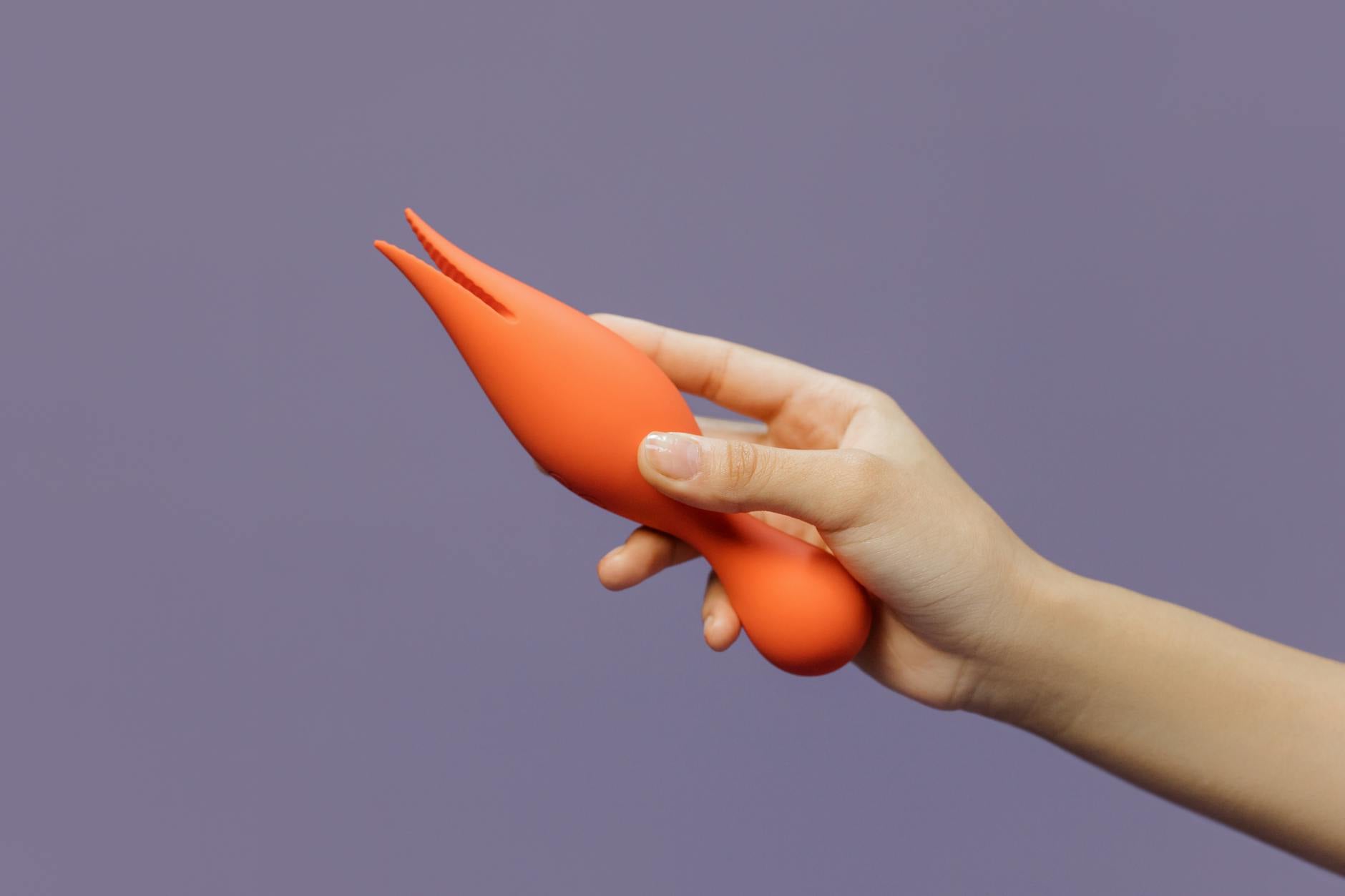
Photo by cottonbro studio on Pexels
Setting expectations: the first time
Your partner might worry that you'll prefer the toy to them. You might worry that using it means something's wrong with your sex life. Both of those thoughts are normal and both are worth saying out loud.
The truth: a lemon toy is not a replacement. It's an accent. It's like saying you prefer a specific song because you like the guitar solo—that doesn't mean you hate all other music.
Set expectations for the first time explicitly. "I want to try this together. If you don't like it, we stop. If it's weird at first but you want to keep going, we keep going. There's no pressure." Then actually mean it. If your partner is uncomfortable, you pause. This builds trust for future exploration.
Also manage your own expectations. The first time might not be transcendent. It might feel awkward. It might feel amazing. Any of those are fine. You're learning how your bodies work together with this new tool.
The intensity conversation matters more than you think
Most lemon vibrators have 3-5 intensity settings. This is where partnered sex gets collaborative in a way it rarely does otherwise.
Before you use it, ask your partner: "What intensity feels good to you?" Not what you think should feel good. What actually does. Some people love subtlety. Some people want to feel every pulse. Your partner's answer is information, not criticism.
During sex, you can also say things like, "Go a bit lower" or "That's perfect" or "Can you move it slightly left?" This kind of communication is vulnerable and honest and exactly what most couples need more of.
One specific tip: if you're coming close to orgasm and your partner is holding the toy, tell them immediately. Don't wait until you're at the edge to mention it. Say, "I'm getting close. Keep the intensity right here." Most partners genuinely want to know this. It helps them sync with you.
The emotional part: what might come up
Sometimes during this first experience, one person gets emotional. Maybe you cry a little during orgasm. Maybe your partner feels unexpectedly vulnerable. Maybe it brings up stuff about body confidence or feeling desired or what intimacy means to you both.
All of that is normal. Don't ignore it. After you've both settled, if something emotional happened, acknowledge it. "That felt different. I got emotional. That's okay." Emotions during sex often mean something is shifting—usually in a good direction.
Other common feelings: guilt ("Am I being selfish by wanting this?"), inadequacy ("Should I be enough on my own?"), or disconnection ("This feels too mechanical."). These are all treatable with conversation. Usually the guilt dissolves once you realize your partner actually wants to see you come hard. The inadequacy shifts when your partner says, "I love seeing you this excited." The disconnection eases when you remember that you're doing this together.
After: the conversation that cements it
Don't just roll over and sleep. Spend five minutes talking about what you experienced.
"What was that like for you?" "Did that feel good?" "Would you want to do that again?" "What did you like most?" "Is there anything you'd change?"
These conversations are where intimacy deepens. You're not just sharing a physical experience. You're building a shared language around desire and pleasure. That's the stuff that makes long-term partnerships stronger.
If one of you didn't enjoy it, that's also worth discussing. "It wasn't my thing, but I liked that we tried it together." That's a complete sentence and a valid outcome.
Common hiccups and how to handle them
Sensory overwhelm. If the intensity or sensation is too much, pause. There's no prize for powering through. Lower the intensity. Take a breath. You can always build back up.
Loss of focus or arousal. Sometimes introducing a new element actually interrupts the flow. That's fine. You can try again another time, or you can put the toy aside and go back to what was working. Pleasure doesn't require props.
Mechanical difficulties. The toy isn't holding charge, or the button is hard to reach, or it's making weird noises. These are logistical problems, not relationship problems. Troubleshoot them separately from the intimacy question.
Different desire levels. One person wants to use toys every time. The other wants to once a month. Negotiate. Neither person gets to unilaterally decide frequency.
Revisiting the conversation as you go
This isn't a one-time setup. As you use a lemon clitoral vibrator together over weeks and months, your preferences will shift. Maybe you discover you like it best during a certain time of day. Maybe you learn that intensity 3 is perfect but intensity 4 feels numb-inducing. Maybe your partner learns they enjoy holding it more than you suspected.
Keep checking in. "This has been really great. Are we happy with how this is working?" These small moments of attunement are where real intimacy lives. You're not just using a toy together. You're practicing the art of asking for what you want and listening to what your partner needs.
Why this actually makes sex better
Couples who introduce toys together often report that their entire sexual dynamic shifts. Not because the toy is magical. But because they've opened a door to honesty. You can't use a lemon vibrator with your partner without saying things like, "I want this," and "This feels amazing," and "Yes, keep going."
That vocabulary changes how you talk to each other in every other area too. You start asking for what you need. You start listening more carefully. You start believing that pleasure and connection aren't separate things.
FAQ: What people actually ask
Can I use a lemon vibrator during every sexual encounter?
Yes, if both of you want to. There's no rule that says toys are occasional treats. Some couples use them regularly and love it. Others prefer them for specific moods. Check in with your partner about what rhythm feels right for you both.
What if my partner is worried the toy will hurt?
It won't. Lemon clitoral vibrators are designed to work with the body's physiology. The suction sensation is gentle at lower intensities and can feel intensely pleasurable at higher ones. Start low. Let your partner see it in action on a low setting before it touches skin.
Will using a toy make me less sensitive to my partner's touch?
No. This is a common fear with no scientific backing. Your clitoris doesn't become desensitized to your partner because you used a toy. If anything, you'll probably discover new preferences and ways to respond together.
What if one of us orgasms and the other doesn't?
That's normal. People don't always come at the same time. Keep the toy going if one person hasn't orgasmed yet. Or pause and cuddle. Or do something else. Orgasm isn't the only endpoint of sex.
Is it weird to use a lemon toy if we've been together for years?
Not at all. Many long-term couples find that introducing toys years into a relationship is what rekindles curiosity and excitement. You're not fixing something broken. You're exploring a new dimension of something you already love.
How do I bring this up if my partner rejected the idea once before?
Let some time pass. Maybe they've shifted their perspective. Or offer a different framing: "I was thinking about what you said before, and I understand. But I also found some information that made me reconsider. Would you be open to talking about it differently?" Respect their answer either way.
The real stuff
Using a lemon vibrator with your partner isn't about fixing a broken sex life or proving something. It's about saying, "I trust you enough to ask for what I want. I want to see you come. I want us to explore together." That kind of vulnerability, spoken and embodied, is what makes sex meaningful.
Your pleasure matters. Your partner's desire to see you experience it matters. And a tool that helps you both get there doesn't diminish any of that. It just makes room for more of it.
If you're ready to explore this—or if you want more guidance on navigating intimacy shifts with your partner—reach out to us. We're here to answer questions that sex ed didn't cover.