
Let's address the elephant first
You're worried it'll feel clinical. Or like you're replacing your partner. Or that they'll think you're not satisfied. Here's the truth: most couples who bring a lemon vibrator into their sex life together report that it actually deepens intimacy, not threatens it. The reason isn't complicated. When you introduce something intentionally, with conversation beforehand, it becomes collaborative rather than secretive. That shift alone changes everything.
Why this matters more than you think
About 60% of couples have never discussed toy use together, even though studies show partnered vibrator use significantly increases pleasure and satisfaction for both partners. The gap between desire and action often comes down to one thing: nobody wants to be the first to bring it up. If you're reading this, you're already past the hardest part.
Using a Lemon clitoral vibrator with a partner isn't a workaround for what you two already have. It's an addition. The difference sounds small, but linguistically and emotionally it's enormous. An addition suggests expansion, not substitution.
The conversation before you get naked
This is not sexy pillow talk. It's better if it happens clothed, in daylight, when neither of you is aroused. I know that sounds anticlimactic. It's the opposite.
Here's a frame that works: "I've been thinking about trying something that might feel really good. I want to do it with you, not alone. Are you open to exploring that together?"
Notice what that does. It positions the vibrator as something you want to share with them, not something you need because they're insufficient. Their answer might be yes immediately, or it might be "tell me more." Either response is workable.
If they're hesitant, ask specifically what concerns them. Is it ego? Logistics? Worry about mess or noise? Most objections dissolve when named directly. "I'm worried I won't know what to do" is fixable with clear communication. "I think you don't want me anymore" deserves a different kind of conversation, one that might benefit from talking to someone like me professionally.
The first time setup matters
Four things that make the experience feel less awkward and more integrated:
1. Do it during foreplay, not as the main event. Introduce your lemon vibrator when you're already kissing and touching, not as an opening gesture. This frames it as an enhancement rather than a replacement activity.
2. Let them hold it first (if they want). Handing your partner the Lem and letting them explore how it feels in their hand, how the settings work, what patterns exist. This removes mystique and gives them agency. Some partners love applying it themselves. Others prefer you do it. Both are completely normal.
3. Use it on external sensation only, first time. The clitoral vibrator is designed for external stimulation, and that's where it shines. Keep penetration separate for now. One new thing at a time.
4. Keep the lights on and maintain eye contact. I know vulnerability feels risky, but this is exactly when eye contact matters most. It anchors you both in presence rather than performance. You're in this together.
What actually happens during partnered use
Honestly though, there are a few different rhythms that work, and you'll find what feels right through experimentation.
Some couples use the Lem vibrator while penetrating. Others use it during foreplay before penetration happens. Some use it solo on one partner while the other partner is involved through touch, kissing, or their own pleasure. There's no correct order or configuration. The point is collaboration and communication in the moment.
Your partner might notice that your body responds faster, or differently, with the vibrator involved. That's not a referendum on them. It's physiology. The Lem's suction technology stimulates nerves in a specific way that sometimes feels more intense than manual touch alone. That intensity can coexist with deep connection and arousal from your partner's presence and touch. Both things are true.
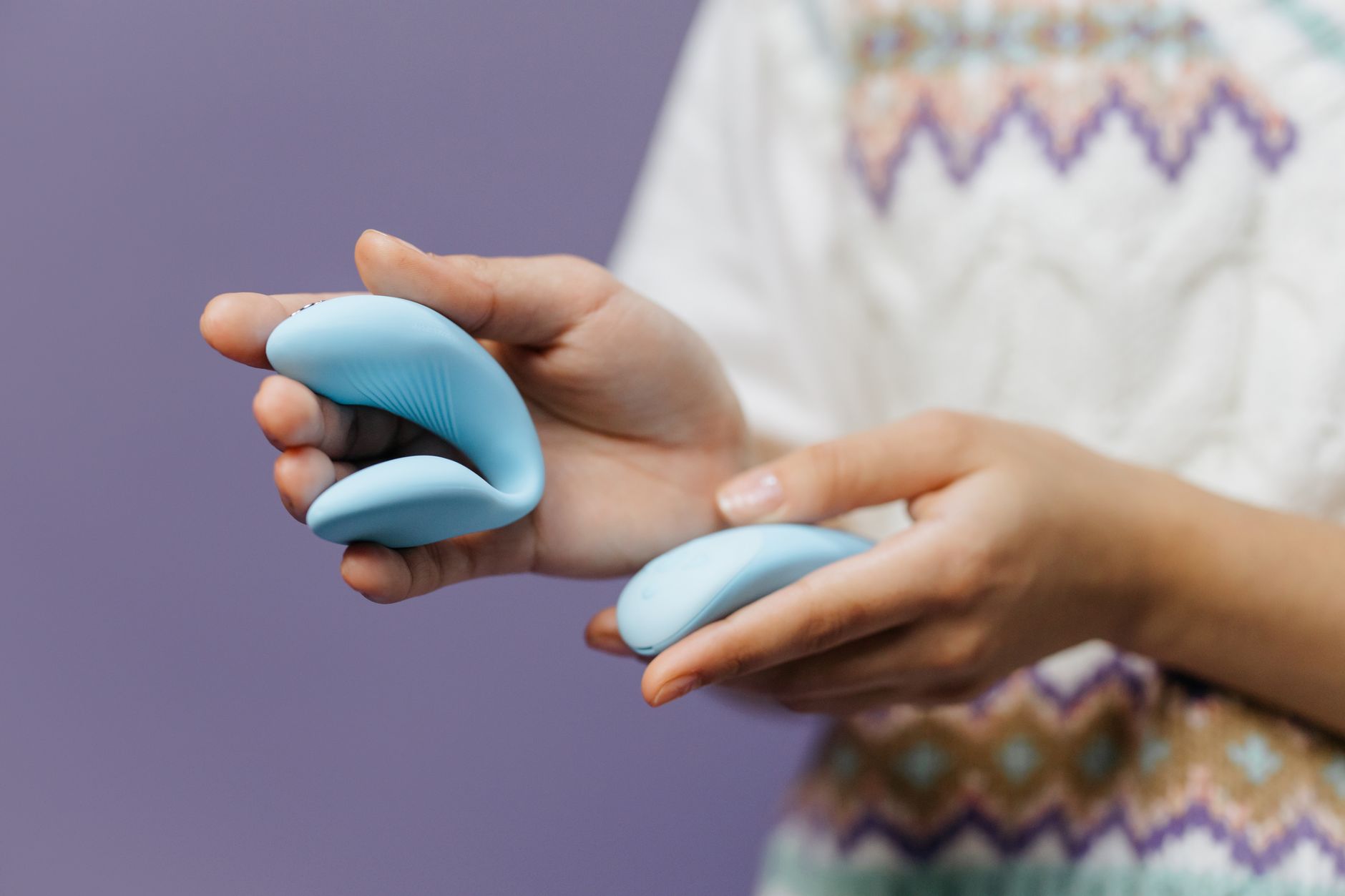
Photo by cottonbro studio on Pexels
If you orgasm faster with the vibrator involved, that's okay. You don't have to wait for your partner to catch up. You can have your pleasure and then shift focus to theirs, or you can stay in that aroused state and enjoy the transition together. The old model of synchronized orgasm being the goal has honestly caused couples way more grief than pleasure.
Managing the practical stuff
Your clitoral vibrator needs water-based lube if you're using it during partnered sex. Silicone lube can damage silicone toys, and the Lem is silicone. Water-based is your friend here. It also makes the sensation smoother and more comfortable.
Noise is real. The Lem has a few intensity settings. Lower patterns are quieter if sound is a concern for you. If you live with roommates or have kids who might knock, knowing your quietest setting removes one more barrier to feeling relaxed.
Cleanup after. Use warm water and gentle soap. Your partner might actually enjoy doing this together. It's an extension of aftercare, a moment to stay present and connected.
When it transforms things
Most couples report one of two shifts after introducing a lemon vibrator into their shared sex life. Either they use it regularly and it becomes a comfortable part of their routine, or they use it occasionally and it adds novelty when things feel stale. Both patterns are healthy.
What often shifts most isn't the frequency of sex, but the quality of communication around pleasure. Once you've had the awkward conversation and navigated the first time together, other conversations become easier. "I'd like more oral" or "I miss when we used to do X" or "I want to try Y" all feel less risky after you've already been vulnerable about wanting to explore something new.
That's the real benefit. The vibrator is just the catalyst.
Troubleshooting the common stuff
If your partner feels less engaged or present when the vibrator is involved, pause and check in. Sometimes that means they want to hold it. Sometimes it means they want their hands free to touch other parts of your body. Sometimes it means they need reassurance that this isn't replacing them. All of those conversations are worth having.
If you find yourself reaching for the vibrator every single time you have sex and it's starting to feel mandatory rather than optional, that's worth examining. Is it because you genuinely prefer it, or because it's now the default? There's a difference. Pleasure should expand your options, not narrow them.
If the vibrator itself stops working or the sensation changes, our care guide has everything you need for maintenance. Sometimes a thorough clean is all that's needed. Sometimes it's time to replace it.
The conversation after
Don't skip this. Five minutes after sex, when you're still close but not actively aroused, check in. "What did you like about that?" "Was there anything that didn't feel good?" "Do you want to do this again?" These questions matter because they signal that this is collaborative and ongoing, not a one-time experiment.
If you want to go deeper on this topic, especially if communication around pleasure feels generally difficult in your relationship, talking to a couples therapist can help enormously. I'm biased, but I've seen how much clarity and connection a few sessions can create.
Frequently asked questions
Will using a vibrator during partnered sex make me less responsive to my partner's touch alone?
No. Your body doesn't "get used to" vibrator sensation in a way that erases other sensation. If anything, many people find that exploring different types of stimulation together actually expands their responsiveness across the board. Pleasure is additive, not competitive.
What if my partner is nervous about "doing it wrong" with the vibrator?
This is one of the most common concerns. The Lem is intuitive. Lower settings are gentler. Your partner can start low, listen to your breathing and watch your body response, and adjust from there. They don't need to be an expert. They need to pay attention to you, which they presumably already know how to do.
Is it normal to have an orgasm with the vibrator but not without my partner?
Completely normal. Different stimulation pathways, different contexts, different neurological responses. You're not broken or less able to climax with your partner. You're just responsive to different input. That's actually useful information for both of you.
Can we use a lemon clitoral vibrator during anal or vaginal penetration?
Yes, absolutely. External clitoral stimulation with penetration is actually one of the most common and effective configurations. It targets multiple pleasure zones simultaneously. The Lem works beautifully for this because it doesn't vibrate internally, so there's no conflict with whatever's happening inside.
What if I want to use a vibrator but my partner thinks it means our sex life is boring?
This is a reframing conversation. "Boredom" and "wanting to explore something new" are different things. Lots of couples in deeply satisfying long-term relationships use vibrators. It's not a sign something's missing. It's often a sign of curiosity and confidence in your partnership. If your partner needs more reassurance, this article on partnered pleasure might help frame it differently.
How do I bring this up again if the first conversation didn't lead to anything?
Don't force it. Let a few weeks pass. When the timing feels right, try again with "I've been thinking about that thing I mentioned before. I'm still interested. Can we try it?" If your partner continues to decline without explanation, that's worth exploring in a deeper conversation, possibly with professional support.
What comes next
You're not broken for wanting this. Your partner isn't deficient for being nervous about it. You're both just human, curious, and trying to expand what pleasure looks like in your relationship. That takes courage on both sides.
Start with the conversation. Then start small. Pay attention to what feels good, what feels weird, what brings you closer. The Lem is just a tool. The real work is the vulnerability and communication. Everything else follows from there.
If you want to talk through your specific situation, reach out. That's what I'm here for.