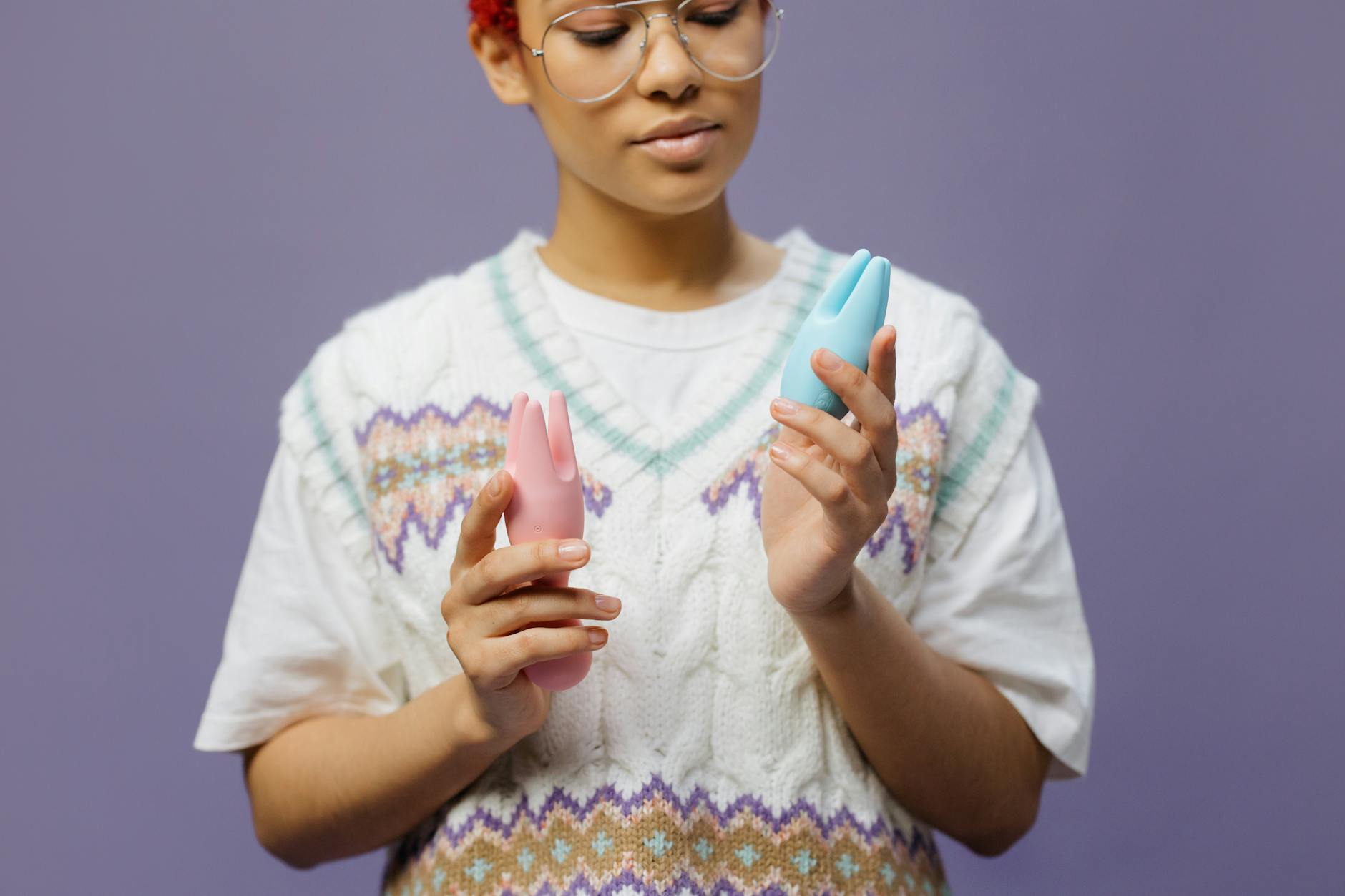
Let's be real about postpartum pleasure
You've been told a lot about what happens to your body after giving birth. Probably not much of it has included the word "pleasure." That gap is the problem. Your pelvic floor needs time to heal, yes. But healing doesn't mean putting your sexuality in a box for months. It means being intentional about when and how you reconnect with pleasure so your body can do both things at once. rest and recovery, and gradual, gentle reconnection to what feels good.
Honestly, a lot of people find that using a lemon clitoral vibrator during the postpartum period (at the right time, in the right way) actually speeds up that reconnection. Not because vibration heals tissue. But because it tells your nervous system you're safe, worthy of pleasure, and rebuilding yourself. That messaging matters more than most recovery guides admit.
When can you actually start
The real timeline isn't "six weeks" or "eight weeks." It's more granular than that. Your healthcare provider will clear you for penetrative sex at your postpartum check-in, usually around six weeks. Penetrative sex and clitoral stimulation are different things, though. Your clitoris doesn't have a surgical incision. It didn't tear during delivery (unless there was significant perineal trauma, which changes the conversation).
Clitoral pleasure is medically safe much sooner than penetration. Most people can safely explore gentle clitoral stimulation by week three or four, especially if your delivery was uncomplicated and your pelvic floor wasn't severely damaged. The key word is gentle. Your pelvic floor is swollen, tender, and firing inconsistently right now. Aggressive or even moderate direct stimulation can overload it.
Talk to your midwife, OB, or pelvic floor physical therapist before you start. Not because pleasure is shameful or weird to bring up (it's not), but because they know your specific healing situation. If you had a perineal tear, episiotomy, or vacuum-assisted delivery, your timeline shifts. If you're exclusively breastfeeding and dealing with low estrogen, your tissue sensitivity is different too.
Why lemon clitoral vibrators are particularly good for this phase
Three reasons a lemon vibrator (or any good clitoral vibrator) works so well during pelvic floor recovery.
First: suction, not direct pressure. The Lem uses gentle air-pulse suction rather than direct mechanical vibration on your clitoris. This matters enormously during healing because your tissue is inflamed and sensitive. The suction feels like stimulation without the harsh friction. You can control exactly how much pressure you're applying by adjusting your body position and the intensity level.
Second: you control the pace. Your pelvic floor is in a weird state right now. Some days it's tight, some days it's floppy. Kegel exercises help, but so does gentle stimulation that doesn't demand anything of the muscle. A vibrator lets you explore sensation at your own speed without pressure to "perform" or finish quickly. That psychological permission is huge.
Third: it's emotionally restorative. After birth, many people feel disconnected from their bodies. The postpartum body is not your body. Your breasts might be leaking milk. Your belly is loose. Your pelvic floor is malfunctioning. Using a lemon vibrator during recovery isn't just about physical sensation. It's about telling yourself your body is still worthy of pleasure, still yours, and still capable of joy. That's not small.
The technique that works
If your healthcare provider has cleared you and your pelvic floor is ready, here's how to actually use a clitoral vibrator during early postpartum healing.
Set up for comfort first. You're probably still sore everywhere. Sit or lie in whatever position doesn't put pressure on your perineum. For many people, this means lying on their back with pillows under their knees, or sitting upright with a pillow between their legs. Figure out what doesn't hurt before you even turn the vibrator on.
Start on the lowest setting. The Lem's pattern 1 is already quite gentle. Start there. You can always turn it up. You cannot undo overstimulation as quickly. Your clitoris will be extra sensitive right now because of swelling and hormonal shifts, especially if you're breastfeeding.
Let arousal build slowly. Your arousal curve right now is different from before. It takes longer to warm up. Spend five to ten minutes on low intensity before you even think about increasing it. Your nervous system needs time to shift out of "protect this healing body" mode and into "this is safe" mode. That's not slow. That's the right pace.
Use it as a tool for reconnection, not performance. You're not trying to reach an orgasm in three minutes. You're exploring what still feels good. Some days that might mean you climax easily. Some days it might mean you get halfway there and realize you're exhausted and that's fine. Both are okay. The goal is learning your postpartum body, not proving it still works.
The partner conversation during recovery
If you have a partner, this part matters. A lot of couples avoid the sexuality conversation during postpartum recovery because it feels fraught. Either the partner feels rejected ("You won't be intimate with me"), or the birthing person feels pressured ("I'm bleeding, my body is destroyed, and now I also have to manage their disappointment"). It's a mess.
Using a lemon clitoral vibrator during recovery is a way to say: "I'm rebuilding my relationship with pleasure right now, and it looks different for a bit." You might want to use it solo. You might want your partner present but not touching. You might want them to use it on you. All of those are legitimate options, and none of them obligate you to penetrative sex or to finish quickly so your partner feels included.
If your partner is curious about being involved, the invitation is: "I'm healing. I'm sensitive. I want you to watch me take care of myself, and that's enough right now." Many couples find that witnessing pleasure (without it being directed at them) is actually deeply intimate during this phase.
Common concerns, answered
Will vibration mess up my pelvic floor healing? No. Your pelvic floor heals through rest and gradually restoring function. Gentle clitoral stimulation doesn't interfere with either. What it does do is encourage blood flow to the area and keep your nervous system engaged with pleasure, which supports overall healing.
Will it feel different than before? Absolutely. Your pelvic floor is swollen. Your hormones are all over the map (especially if breastfeeding). Your clitoral sensation might feel muted, or paradoxically more intense. This is temporary. As your hormones stabilize and the swelling goes down, sensation normalizes. For now, your job is to be curious about what this version of your body needs, not frustrated that it's not the before version.
Can I use it if I'm breastfeeding? Yes. Low estrogen during breastfeeding makes clitoral tissue more sensitive, so you might want to start even lower than you think. Some people find they're more orgasmic during breastfeeding. Others find pleasure feels kind of muted. Both are normal and temporary.
What if I don't feel ready? Then don't. There's zero rush. Some people need three months. Some need six. Pleasure during recovery is an option, not an obligation. If you try using a lemon clitoral vibrator and it doesn't feel right, stop. Your instincts about your body are the only guideline that matters.
How to know if you're pushing too hard
Pain is the signal. Not pressure, not fullness, but actual pain. If you're using a lemon vibrator and it hurts, stop immediately. Soreness the next day that feels like heaviness or aching is a sign you did too much too soon. Scale back to lower intensity or shorter sessions.
Pelvic floor tension creeping back is another sign. If you notice you're gripping or tensing your pelvic floor muscles during stimulation (which many people do unconsciously), ease off. You're trying to teach your pelvic floor to relax and function normally, not to clench harder.
The bigger picture
Your body just did something extraordinary. It grew a human and then opened itself to let that human out. Recovery isn't about getting back to "normal" as fast as possible. It's about meeting this new version of your body with patience and curiosity. A lemon clitoral vibrator can be part of that if it feels right for you. It's a tool for saying: I still deserve pleasure. My sexuality didn't disappear. My body, even wounded and healing, is still mine and still capable of joy.
Take your time. Follow your healthcare provider's clearance. Listen to your body. The pleasure that waits for you on the other side of postpartum recovery isn't rushing anywhere.
Common questions about vibrators and postpartum healing
How long after birth is it safe to use a clitoral vibrator?
Most healthcare providers clear gentle clitoral stimulation around week three or four postpartum, assuming an uncomplicated delivery. Penetrative sex typically gets cleared around six weeks. Ask your midwife or OB specifically about your situation, since perineal tears or trauma change the timeline. When you do start, begin with the absolute lowest intensity and take time to warm up.
Will using a lemon vibrator make my pelvic floor heal faster?
Not directly. Your pelvic floor heals through rest and Kegel exercises as cleared by your provider. What vibration does do is encourage blood flow and keep your nervous system engaged with sensation, which can support overall healing. Think of it as a tool for reconnection, not a recovery treatment.
Is it normal to feel different sensation postpartum?
Completely normal. Your clitoris might feel numb because of swelling and hormonal shifts. It might feel hypersensitive. It might feel exactly the same but emotionally feel different because your body feels like a stranger right now. All of these experiences normalize over weeks and months as your hormone levels stabilize and the physical swelling decreases.
Can my partner use the lemon vibrator on me during recovery, or should I only use it solo?
Both are fine, depending on what feels good to you. Many people prefer using it solo during early recovery because they can control exactly what's happening and stop instantly if something doesn't feel right. Others want their partner present. The only rule is your comfort. If being touched feels unsafe or triggering, say no. If you want them to watch, great. If you want them to help, that works too.
What if using a vibrator makes me feel guilty or weird about postpartum healing?
Talk to your partner about it if you have one. Talk to your doctor. Talk to a therapist. The culture tells us that postpartum is about selflessness and recovery and definitely not about pleasure, and that's a lie that hurts people. Your sexuality is part of your healing, not a distraction from it. If you feel guilty, that's usually a signal that you're internalizing some junk messaging about bodies and pleasure and motherhood. You deserve to unpack that.
When should I check in with my pelvic floor physical therapist about vibrator use?
Bring it up at your next visit. A pelvic floor PT can tell you exactly where you are in the healing timeline and whether gentle vibration would actually help or if it's still too early. They can also watch for signs of guarding or tension that vibration might trigger, and help you build better pelvic floor awareness while you're exploring sensation again.
Where to go from here
Your postpartum recovery is unique to you. What works for your friend might not work for you. What feels good in week six might feel wrong in week four. That's all normal. The goal isn't to get back to your pre-baby sexuality as fast as possible. It's to build a postpartum sexuality that works for this version of your body and your life.
If you're curious about how a lemon clitoral vibrator might fit into your recovery, start by getting clearance from your healthcare provider. Then start small. Low intensity, short sessions, lots of patience. Your body is rebuilding itself. Pleasure during that process isn't indulgent. It's part of the healing.