
Let's talk about what comes after
Infidelity is a wound. What people rarely discuss is what comes after the fight, the tears, the decision to stay or rebuild. If you've chosen to recommit, you're now navigating something most relationship books skip entirely: how to be physically intimate again when your body remembers the betrayal.
Your nervous system isn't convinced it's safe yet. Your mind is on board with forgiveness, but your body is still checking exits. That's not a sign the relationship is doomed. It's a sign you need patience, boundaries, and sometimes new tools to help your body catch up to your heart.
Why physical intimacy gets locked after infidelity
When trust is broken, your body's threat-detection system activates. Oxytocin production (the bonding hormone released during sex and physical affection) drops. Your parasympathetic nervous system, which handles arousal and pleasure, hands over control to your sympathetic system, which is all about survival. You can't mentally decide to feel safe into arousal.
This means spontaneous sex probably feels impossible right now. You might freeze mid-intimacy, or lose arousal suddenly without warning. You might feel resentful of your partner's touch before you feel connected. All of this is normal. Your body is doing exactly what it's supposed to do when safety has been compromised.
Rebuild takes months, sometimes longer. The good news: lemon vibrators help because they shift the locus of control. When you or your partner holds the device, you're setting the pace, the intensity, the permission. That agency matters more than you'd think.
Starting small: why sensation is different now
After infidelity, many people report that arousal feels muted or distant. You might touch your partner and feel intellectually that you love them, but the spark isn't there. This isn't permanent. It's a protective response.
Start by exploring pleasure separately. Solo sessions with a lemon clitoral vibrator help your nervous system remember that pleasure is available to you, that your body still works, that you're allowed to feel good. This is not betrayal of your partner. This is preparation for reconnection.
During solo use, focus on the sensation itself rather than where your mind wants to go. If the Lem vibrator's suction pattern feels too strong, dial it down to pattern 1 or 2. You're relearning what feels good without pressure from a partner's timeline or expectations. That freedom is healing.
Introducing shared pleasure: the conversation first
Before bringing a lemon sexual toy into couples' intimacy, have a conversation that isn't about sex. Sit somewhere comfortable, not in the bedroom, with clothes on. Use words like:
"I want us to reconnect physically, and I'm noticing it's harder than I expected. I'm thinking about trying something together that might help me feel more in control. Would you be open to that?"
Notice what you're not saying: you're not blaming. You're not saying "you did this to me so you have to accept this." You're inviting collaboration.
Your partner might feel relieved. They might feel scared, as if the toy is a replacement or a reminder they failed to satisfy you. Clarify: "I'm using this to help my nervous system feel safe again. I want that safety so we can be closer."
How to actually use a lemon vibrator together after infidelity
Four phases help couples move through this:
Phase 1: Observation (weeks 1-2). You use the device alone while your partner is in the room, not touching you, maybe reading or working nearby. Your partner isn't responsible for your pleasure. You're reclaiming it. This takes the performance pressure off.
Phase 2: Directed touch (weeks 2-4). You guide your partner's hand while holding the lemon clitoral vibrator. You decide when they touch, where, how long. They follow your direction without initiating. Control stays with you.
Phase 3: Shared sensation (weeks 4-8). Your partner uses the vibrator on you, but you've negotiated specific boundaries beforehand. "Start on pattern 2, ten minutes, then we pause and reconnect." The structure removes the guesswork that often triggers anxiety.
Phase 4: Integration (ongoing). The toy becomes part of your shared intimacy naturally, not as a workaround but as something you both enjoy. This doesn't happen on a timeline. For some couples it's six months. For others, a year or more.
Don't skip phases. If you're in phase 1 and your partner tries to move to phase 3, name it: "I'm not ready for that yet." Respecting that boundary is part of rebuilding trust.
The emotional work you'll do in parallel
A lemon vibrator can't fix infidelity. It's a tool, not a band-aid. While you're exploring physical intimacy, you and your partner should also be doing the harder work: therapy, honest conversations about what led to the breach, and mutual commitment to change.
Some couples find that couples counseling alongside physical reconnection works best. A therapist can help you both understand the infidelity without minimizing it or weaponizing it. Individual therapy also helps, especially for the person who strayed. Understanding your own vulnerabilities and patterns prevents repetition.
If you're the one who was unfaithful, know that your partner's hesitation around sex isn't punishment. It's self-protection. You earn back physical trust through consistent action, not just words. Showing up, being transparent, respecting boundaries, and proving that you're committed to rebuilding safety is how you move forward.
If you're the one who was hurt, using a lemon clitoral vibrator is an act of agency. You're deciding what you want your intimate life to look like, and you're including your partner only when it feels right. That matters.
Practical tips for the first time
When you do decide to use a lemon vibrator together:
- Communicate beforehand. "I'd like to try this together tomorrow evening. I want us to have plenty of time and no distractions." Planning removes spontaneity, which can feel safer.
- Set a time limit. "Let's do 20 minutes and then pause to reconnect and talk." You're building back tolerance for intimacy in doses.
- Use plenty of lubricant. Anxiety tightens everything. Water-based lube helps with comfort and signals that pleasure is the goal, not pressure.
- Agree on a check-in system. "If I tap your arm twice, that means let's take a break." Non-verbal signals help when emotions are high.
- Expect awkwardness. The first time will feel weird. You're relearning each other's bodies under new conditions. That's okay.
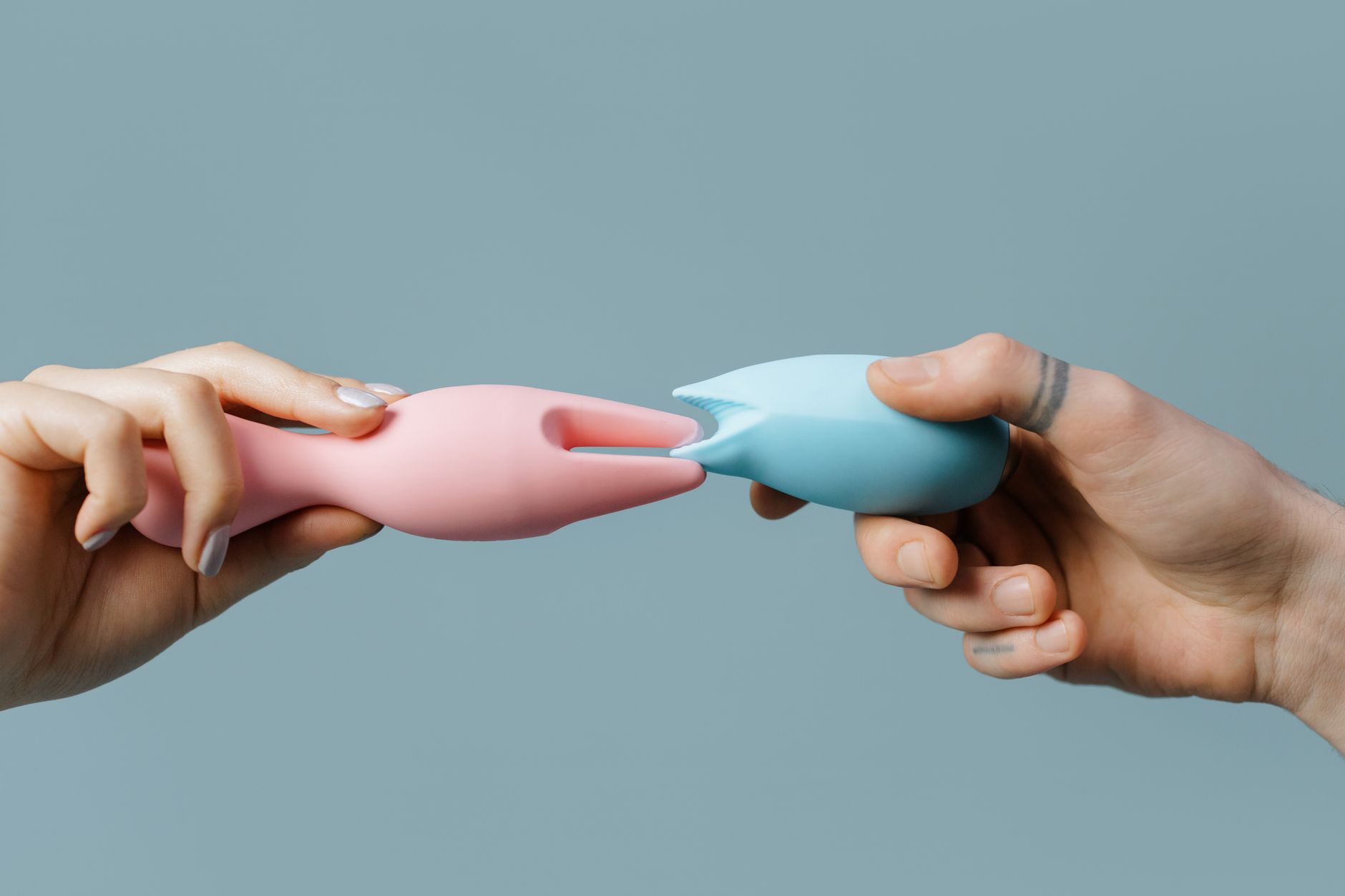
Photo by cottonbro studio on Pexels
When progress stalls (and how to restart)
Some couples hit a wall. You'll be doing well for a few weeks, and then something triggers a memory, and suddenly intimacy feels scary again. Your partner says something that lands wrong. A song plays. The betrayal floods back.
This doesn't mean you've failed. Healing isn't linear. When you stall, return to an earlier phase. If you were in phase 3 and something broke, go back to phase 2 for a week or two. Rebuild the sense of control.
Talk about what happened. "That touch reminded me of something I'm not ready for yet." Or "I realized I'm not actually ready to share pleasure like this. Can we slow down?" These conversations are uncomfortable, but they're also where trust gets rebuilt. You're proving that your needs matter and that your partner will listen.
If you're stuck for more than a few months and feel like you're not progressing at all, couples therapy specifically focused on rebuilding after infidelity is worth the investment. A sex-positive therapist trained in trauma can help you both understand what's blocking you.
The long view: what comes after recovery
Couples who successfully rebuild after infidelity often find that their relationship is deeper than before. Not because the infidelity was good. But because they chose to do the work, set real boundaries, and learned how to communicate through hard things.
Your intimate life might look different than it did before. Some couples find that introducing tools like lemon vibrators becomes part of their regular rhythm because it shifted how they communicate about pleasure. Some couples use them occasionally as a way to reconnect. Some move away from them once physical trust is restored.
There's no "right" version. The right version is the one where both of you feel safe, desired, and committed to continuing to show up for each other.
People also ask
Can we use a lemon clitoral vibrator if we're still not sure we want to stay together?
If you're still in active conflict about whether the relationship is worth saving, introducing sexual tools probably isn't the move right now. First get clarity on whether you both want to rebuild. A therapist can help you have that conversation. Once you've decided to commit to recovery, then explore physical reconnection tools.
Is it normal to feel guilty about enjoying a lemon vibrator when my partner caused the hurt?
Completely normal. You might feel like pleasure is disloyalty, or that you're "getting over it" too fast if you can still orgasm. Remind yourself: your pleasure isn't about them. It's about reclaiming your own body and your right to feel good. Guilt often fades when you separate the two things in your mind.
How long before physical intimacy feels normal again?
Every couple is different. Some couples feel reconnected after a few months of intentional work. Others need a year or more. Variables include how long the infidelity went on, whether it was emotional or physical, whether you're in therapy, and how committed both people are to rebuilding. There's no deadline. Rushing it often backfires.
What if one partner wants to use toys and the other doesn't?
That's a real conversation to have. Some partners feel threatened by toys. Others have religious or personal reasons for avoiding them. Listen to why your partner is hesitant. Maybe they're worried the toy means something about their adequacy (it doesn't). Maybe they're genuinely uncomfortable. If it's the latter, honor that. Find another way to rebuild. Forcing a tool into a reluctant partner's hands won't help trust.
Can a lemon vibrator actually help after infidelity or is it just avoidance?
It's a tool, not a solution. If you're using a vibrator instead of doing the emotional work, yes, that's avoidance. But if you're using it alongside therapy, honest conversations, and genuine commitment to rebuilding, it's a legitimate part of reconnection. It helps your body catch up to your mind and gives you control during a time when control was taken from you.
Should I tell my therapist we're using a lemon vibrator together?
If you have a sex-positive therapist, yes. They can help you think through timing, boundaries, and what to watch for. If your therapist has shown they're not comfortable discussing sexuality, it's worth finding one who is. This is an important part of your healing, and you deserve a professional who treats it that way.
Moving forward
Infidelity breaks something real. But real things can be repaired if both people show up for it. A lemon clitoral vibrator isn't the repair itself. It's a signal that you're ready to invite pleasure back into your relationship, and that you're doing it with intention and care.
Your intimate life doesn't have to look like it did before. It can be better. Slower, more communicated, more honest. That's worth the work. If you have questions about rebuilding intimacy or want to explore more about tools and techniques, reach out to us. You don't have to figure this out alone.
Sources
- Gottman, J. M., & Silver, N. (2015). The seven principles for making marriage work: A practical guide from the country's foremost relationship expert. Harmony.
- Schneider, J. P., Corley, M. D., & Irons, R. R. (2012). Surviving disclosure of infidelity: Results of an international survey. Journal of Couples & Relationship Therapy, 11(3), 213-232.
- Johnson, S. M. (2019). Attachment theory in practice: Emotionally focused therapy (EFT) with individuals, couples, and families. Guilford Press.