Let's name the thing nobody talks about
You're not broken. You're nervous about solo pleasure because you learned to be nervous about it. That's a huge difference. Religious upbringing, family messaging, friends who made jokes that stuck, partners who didn't validate it, or just the ambient cultural noise that women's desire is something to manage, not celebrate. That's not your wiring. That's conditioning.
The good news is that conditioning can be unpicked. Not in a single evening, but methodically, with patience, and with the right tools.
What the nervousness actually costs you
Anxiety during solo sex does something specific to your nervous system. It keeps you in fight-or-flight mode. That state constricts blood vessels, tightens the pelvic floor, and basically tells your body "danger is near." Your brain can't simultaneously feel pleasure and feel threat. One wins. Usually, threat does.
Over time, that pattern becomes your baseline. You avoid solo pleasure because it's never satisfying, but it's never satisfying because you're anxious about it. That's a loop worth breaking.
The practical payoff is real. People who reconnect with solo pleasure report better orgasms with partners, clearer sense of what they actually want, and less resentment in relationships. It's not selfish. It's foundational.
Start with the shame audit
Before you touch anything, get honest about where the nervousness lives. Is it religious? Is it about your body? Is it fear of being "caught"? Is it that pleasure feels selfish? Is it physical discomfort? Each one has a different door in.
Write it down if that helps. The specificity matters. "I'm nervous about solo pleasure" is too big to work with. "I feel guilty because my family called masturbation dirty" is something you can actually address.
Once you name it, you can challenge it. A therapist who specializes in sexuality can help accelerate this. But even on your own, asking yourself "Is that actually true for me right now?" creates a crack in the belief.
The environment piece is not trivial
If you're nervous, your brain needs to feel safe. That's not weakness. That's physiology.
Some non-negotiables: a locked door, a time when you genuinely won't be interrupted, and ideally a space that feels like yours. Not utilitarian. Not emergency-mode. A bedroom with a candle, a bathroom with soft lighting, somewhere that signals to your nervous system: this is allowed.
If you live with roommates or a partner, you may need to get creative. A weekend morning when everyone's out. A hotel room. A friend's place. The specific location matters less than the feeling that you're not going to be discovered mid-vulnerability.
Some people benefit from ambient sound. White noise, lo-fi music, rain recordings. It muffles external sound and also gives your brain something to focus on besides the anxiety spiral.
Why a clitoral vibrator changes the game
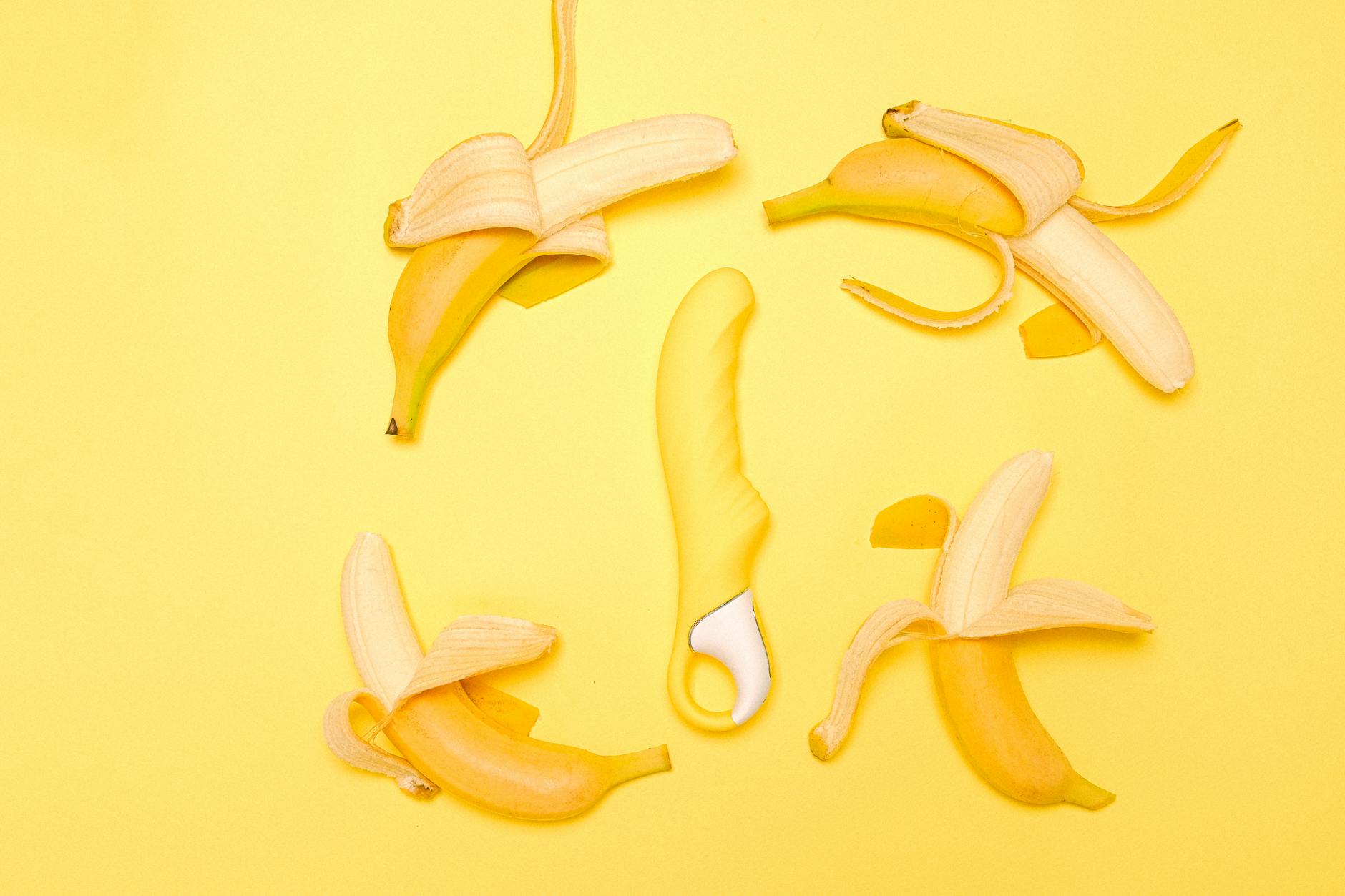
Let's be direct: a lemon clitoral vibrator like those from Lemon Toy Store works differently than your fingers do. It's consistent, it doesn't tire, and it hits nerve clusters in a rhythm your body eventually settles into. That consistency is actually calming for an anxious nervous system.
More importantly, a device creates a psychological boundary. It's not "me doing something sexual." It's "me using a tool for pleasure." That tiny reframe helps some people separate the shame from the act. You're not being "promiscuous" or "desperate." You're using technology the way you'd use a heating pad.
Start on the lowest setting. A lemon vibrator typically has 3-5 speeds. Don't hunt for intensity. Hunt for the pattern that makes your body relax. For nervous systems, slower often wins. You're teaching yourself that this is safe.
The first session should be unsexy
I'm serious. Don't aim for orgasm. Don't have a goal at all. Your only job is to spend 10-15 minutes with the tool in a private space and notice what happens. That's it.
You might feel embarrassed. You might feel nothing. You might feel a flash of pleasure and then guilt. All normal. You're not failing. You're gathering data about your own system.
Many people find that the anxiety is worse in anticipation than in the moment. Once you're actually there, once you've proven to yourself that nothing bad happens, something shifts. Not everything, but something.
Expect the guilt spiral (and what to do about it)
Guilt often arrives mid-pleasure or right after. That's the conditioning talking, not reality. When it shows up, you have two choices: argue with it or name it and continue.
Naming it works better. "There's the guilt. That makes sense given my background. I'm doing this anyway because my pleasure matters." Then come back to your breath, the sensation, the vibrator. You're not suppressing the guilt. You're deciding it doesn't get to run the show.
Some people find it helpful to have an affirmation ready. Something simple: "This is mine." "I deserve this." "My pleasure is valid." Not because affirmations are magic, but because having a sentence ready gives your brain something to do besides spiral.
Build the frequency gradually
Don't jump from zero to daily. That puts pressure on yourself and defeats the purpose. Start with once a week. Make it a date with yourself. Same time, same space, same tool. Your nervous system likes predictability.
After a few weeks, you might want to increase frequency. You might not. Both are fine. The point is that solo pleasure stops feeling like emergency-mode rebellion and starts feeling like a normal part of self-care.
Many people find that the pleasure improves over time. The first few sessions might be mechanical or uncomfortable. By session four or five, your body starts to relax into it. That's not psychological magic. That's your nervous system learning the pattern is safe.
What to do if you hit a wall
If after six or eight sessions you're still not enjoying it, don't push harder. Instead, troubleshoot. Are you actually alone? Is the space feeling safe? Are you giving yourself enough time? Are you starting on a speed that's too intense?
If the nervousness is tied to deeper shame or trauma, a therapist might be the missing piece. This isn't something to brute-force. It's something to dismantle carefully.
Some people find that partnered intimacy with someone who actively validates their pleasure helps rebuild solo confidence. Others need to do it completely alone first. There's no universal path.
The long game
Reclaiming solo pleasure isn't frivolous. It's reclaiming autonomy over your own body and your own experience of desire. That changes how you show up everywhere else. You stop waiting for permission. You stop performing. You start knowing what you actually want.
When you use a lemon vibrator not because you're desperate, but because you've decided your pleasure matters, something fundamental shifts. The shame doesn't vanish overnight. But it gets quieter. And your own voice gets louder.
People also ask
Is it normal to feel guilty when using a vibrator alone?
Completely normal. Guilt around solo pleasure is one of the most common things I hear about. It usually comes from upbringing, religious messaging, or absorbed cultural ideas that women's sexuality should be reactive, not self-directed. The guilt is learned, not innate. Over time, as you practice self-pleasure without catastrophe, the neural pathway that links solo sex to shame starts to quiet down. Therapy can accelerate that process.
How long does it take to get comfortable with a lemon vibrator?
That varies wildly. Some people feel more relaxed after two or three sessions. Others need six to eight weeks of regular practice. There's no timeline you should be on. The goal is consistency, not speed. Once a week for two months teaches your nervous system safety more effectively than daily sessions full of pressure.
What if I don't orgasm, even with a vibrator?
Orgasm isn't the metric. Pleasure is. If you're using a clitoral vibrator and you feel sensation, that's working. Some people's first orgasms with a device come after weeks of non-orgasmic pleasure. Some never have a solo orgasm but enjoy the sensation of the tool. Both are fine. The point is reconnecting with your body without shame. The orgasm is a bonus, not the requirement.
Should I tell my partner I'm using a vibrator for solo pleasure?
That depends on your relationship and your comfort level. Some partners feel threatened by solo pleasure, which is worth addressing separately. Most actually feel relieved. It takes pressure off them, and it means you're taking responsibility for your own satisfaction. If you decide to tell them, frame it simply: "I'm working on reconnecting with my body and my pleasure. This is for me, not about anything missing with you." Many couples find that one partner's renewed interest in their own pleasure actually improves partnered sex.
Can a lemon vibrator help if I have anxiety disorders?
Potentially, but with caveats. Vibrators can be soothing because of the rhythmic stimulation. But if your anxiety is severe, the psychological barriers (shame, guilt, fear of being discovered) might be too big for a tool alone to solve. A therapist who specializes in both sexuality and anxiety can help you address the barriers first. Then the tool works better. They're not mutually exclusive.
What if I still feel too nervous after trying multiple times?
That's information worth paying attention to. The nervousness might be pointing to something that needs more support than a vibrator and privacy can provide. Shame around sexuality sometimes has roots in trauma, religious conditioning, or relational patterns that benefit from professional help. A sex-positive therapist or a Gottman-trained couples counselor can help you untangle what's underneath the nervousness. There's no shame in needing that support. It's actually the most direct path forward.
The bottom line
Solo pleasure with a lemon vibrator isn't about performance or intensity. It's about deciding that your body, your desire, and your satisfaction are yours to claim. The nervousness you feel isn't a character flaw. It's a learned response. And learned responses can be unlearned. Start small, be patient with yourself, and remember that showing up for your own pleasure is an act of self-respect. If you want to explore this further or work through deeper blocks, reach out to a therapist who specializes in sexuality. You deserve support that feels right for you.