Let's start with what depression actually does
Depression doesn't just make you sad. It kills sensation. Pleasure pathways in your brain go quiet. Even when you want to want something, the neural hardware that makes wanting possible feels broken. Desire becomes theoretical rather than felt, and that gap between knowing you "should" feel pleasure and actually feeling it can be isolating and terrifying.
Here's the part nobody explains clearly: rebuilding sexual desire after depression isn't about willpower or romance. It's about rewiring sensation at the most basic level. And it turns out that air-suction clitoral vibrators like those at Lemon Toy Store work particularly well for this specific job.
Why depression flattens sexual response
Depression alters dopamine and serotonin. These neurotransmitters don't just affect mood. They're central to arousal and pleasure perception. When depression tanks dopamine, the brain stops assigning pleasure value to sexual stimuli. A partner's touch, erotic thoughts, fantasy. nothing registers as pleasurable because the reward circuitry is offline.
Some antidepressants make this worse, particularly SSRIs. They can dampen sensation even after mood lifts. Other people find that mood improves but sex drive doesn't follow, leaving them in a strange liminal space where they're no longer depressed but still numb.
The body itself may feel foreign. Depression often brings dissociation. You exist in your head, disconnected from physical sensation. You might experience genital numbness. Touching yourself might feel like touching a stranger's leg. This is real, common, and recoverable.
Why lemon vibrators help when nothing else does
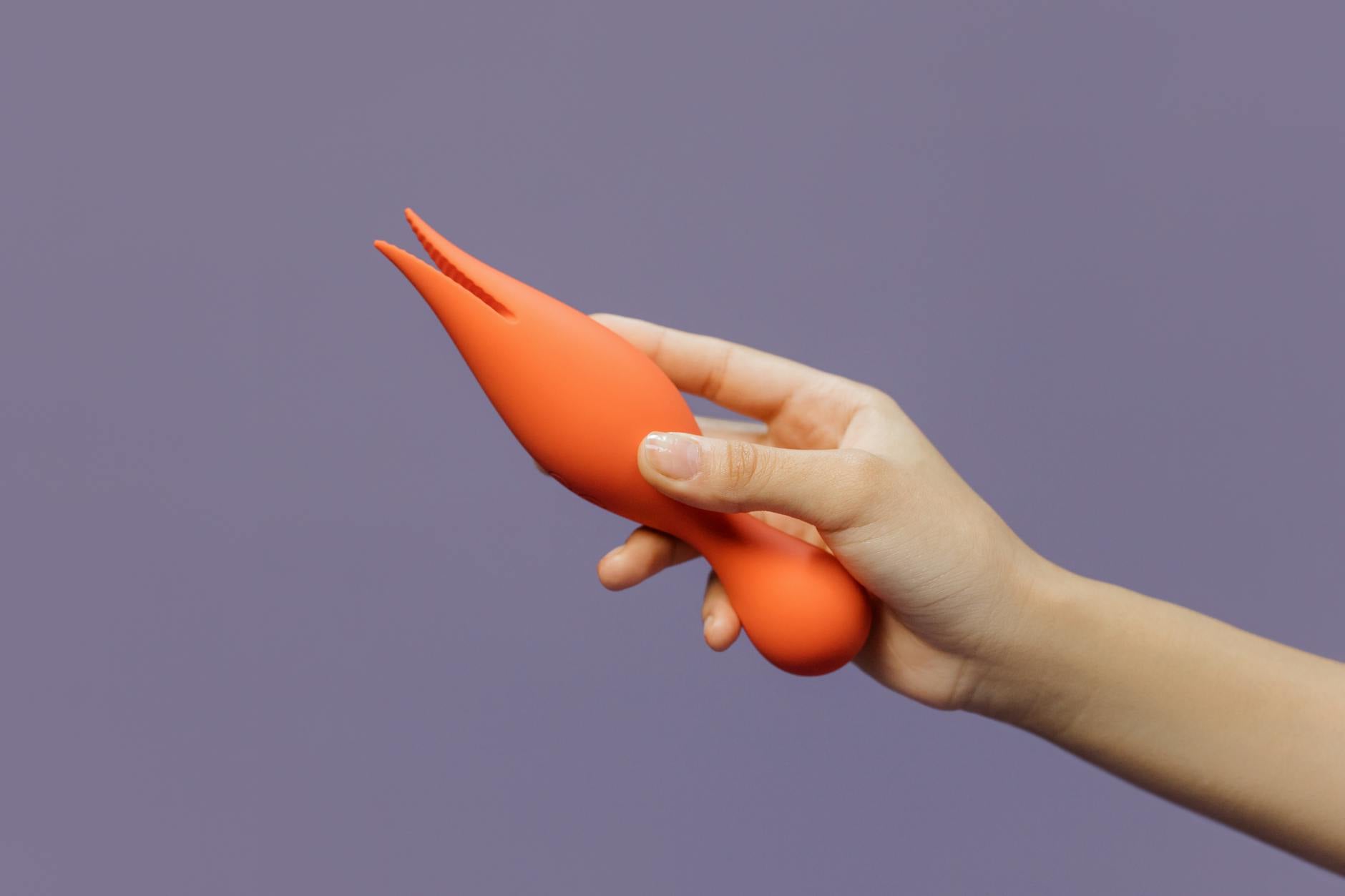
Air-suction technology works differently than traditional vibration. Instead of buzzing, it creates a rhythmic suction sensation that stimulates the clitoral complex without direct pressure. For people recovering from depression, this matters because:
It bypasses willpower. You don't have to "get turned on." The lemon sucker does mechanical work on your nervous system. Sensation can build without needing motivation to build it. You're not waiting for desire to arrive. You're creating sensation and letting the brain catch up.
It's genuinely novel. If you've been using traditional vibrators, air-suction feels completely different. Novelty triggers dopamine. Your brain registers something new and interesting, which can jumpstart the reward system before depression's numbness fully lifts.
It produces results quickly. Most people using a lemon vibrator or other quality lem vibrator report sensation changes within 3-5 minutes. Quick feedback matters when you're testing whether your body can still feel pleasure. The faster sensation arrives, the faster you get evidence that recovery is possible.
Starting when motivation is zero
Depression makes initiation hard. You won't feel like touching yourself. You won't feel horny. You probably won't think about sex. This is the opposite problem of "how to have more pleasure" which assumes you're already showing up. When you're not, the framework changes entirely.
Here's what actually works:
Set a structural boundary. Pick one time per week. Sunday morning, Thursday night. Make it as mandatory as brushing your teeth. You're not waiting for desire. You're scheduling sensation practice the way you'd schedule physical therapy after injury. Your nervous system is injured. This is recovery work.
Do not pair it with anything performative. No fantasy, no porn, no partner present. You're testing sensation in isolation. Add variables later. Right now you're just reestablishing the signal between clitoris and brain.
Start at the lowest setting. The lemon vibrator has five patterns. Begin at pattern 1 or 2. You're not trying to orgasm. You're trying to feel. Most people recovering from depression get their first clear sensation signal at low intensity. Once you feel it, you know recovery is happening.
Sit with five minutes of not-much. Numbness often persists for the first few minutes. This is normal. Your nervous system is remembering how to transmit pleasure signals. The breakthrough usually comes around minute 4 or 5. Stay. The feeling of sitting through nothing and then having sensation return is itself evidence of neurological recovery.
What actually comes back first
If you're waiting for intense orgasms, you'll be disappointed early on. What usually returns first is much smaller: a gentle tingling, a slight warming sensation, a vague sense of "something is happening down there." This is the nervous system waking up. Celebrate it.
Second comes the ability to focus. Depression scatters attention. Many people can't concentrate on sensation even when it's there. As you practice, the brain gets quieter. External thoughts fade. You can actually attend to what's happening in your body.
Third comes variability. One week the sensation feels strong. The next week it's more muted. This is normal. Your body is recalibrating. Hormones, stress, sleep, medication adjustments. all affect sensitivity. Track the overall trend, not day-to-day changes.
Orgasm usually returns last. And it often looks different than pre-depression orgasms. This is fine. Different isn't worse. Your nervous system is rebuilding on new neural pathways. Let it.
The partnership conversation
If you're in a relationship, this changes the dynamic. Many partners feel rejected when depression kills your desire. They take it personally even when you explain it's neurological. This is where clarity helps.
You might say: "I'm rebuilding sensation. This is separate from how I feel about you. I need solo time to do this, the same way I need solo time for therapy or exercise. It's not about you not being enough. It's about me rewiring my nervous system."
Then set a timeline. Not "someday when I feel like it," but "I'm spending time on this for six weeks, then we'll reassess." Timelines reduce ambiguity. Your partner stops wondering if they're being sidelined. You're not rejecting them. You're doing rehabilitation.
Once sensation returns, you can bring your partner back in. How to Use a Lemon Vibrator When Partners Prefer Different Stimulation Speeds covers that conversation separately.
When medication is part of the picture
If you're on antidepressants that dampen sexuality, don't just stop taking them. That's dangerous. Talk to your prescriber about timing, dosage adjustments, or switching to medications with lower sexual side effects. Some SSRIs have fewer libido effects than others. Bupropion actually tends to increase desire. These conversations feel awkward, but psychiatrists have them constantly.
In the meantime, the lemon clitoral vibrator becomes even more valuable. It can help you maintain or rebuild sexual function while your medication stabilizes you mentally. You're treating both systems.
The psychological piece that matters most
Here's what I see consistently in my practice: people recovering from depression often catastrophize sexuality. "What if I can't come back?" "What if this is permanent?" "What if my partner leaves?" These thoughts are depression talking. They feel true because depression makes everything feel true. But sexual recovery from depression is one of the most consistent outcomes I see when people actually do the work.
Using a lemon vibrator or other quality clitoral vibrator becomes proof. Sensation returns. That's not metaphorical. Your nervous system can literally retransmit pleasure signals. You're not broken. You're recovering.
The first time you feel a genuine tingle from a lemon sucker after months of numbness, you'll cry or laugh or both. That moment tells your brain: "Okay, I'm not dead. The machinery still works." Everything after that feels less hopeless.
FAQ: Rebuilding desire after depression
How long before sensation returns?
Most people report noticeable change within 2-4 weeks of consistent use (once or twice weekly). Complete sensation restoration varies widely depending on depression severity, medication, and overall recovery trajectory. Be patient with yourself. Recovery isn't linear.
Will my orgasms feel the same as before?
Probably not, and that's okay. Post-depression orgasms often feel different. Sometimes softer, sometimes more focused, sometimes more full-body. Your nervous system is rebuilding. The sensation that returns may be new. New isn't worse. It's just different.
What if I still feel nothing after a month?
Talk to your psychiatrist or therapist. Sexual dysfunction that persists despite consistent vibrator use and improving mood might signal medication side effects, deeper depression, or another health issue. This doesn't mean something is permanently wrong. It means you need support to dig deeper.
Can I use a lemon vibrator if I'm on antidepressants?
Yes. In fact, using one while medicated might be more valuable because you're treating depression while rebuilding sensation. Some antidepressants suppress arousal temporarily or permanently. Vibrators can often compensate. Ask your doctor if you're uncertain about your specific medication.
Is it weird to need a toy to rebuild desire?
Not even slightly. Depression is a neurological condition. You wouldn't feel weird using physical therapy for a broken leg. This is the same principle. You're rehabilitating your nervous system using a tool designed for that job. Your body doesn't care whether the stimulation is from a partner or a lemon clitoral vibrator. Sensation is sensation.
What if my partner feels threatened by solo practice?
This is worth addressing directly. You might say: "I'm doing this for both of us. I'm rebuilding connection to my own body so that I can actually be present with you later. Right now I need to do this alone." Many partners actually feel relieved once they understand it's medical recovery, not rejection. If your partner continues to feel threatened, couples therapy is worth exploring.
How often should I practice?
Once or twice weekly is a good starting point. Consistency matters more than intensity. Regular practice tells your nervous system that sensation is safe and expected. It rewires more effectively than sporadic intense sessions. Think of it like physical therapy. Small regular doses beat occasional marathons.
The bridge to desire
Depression tells you that pleasure is gone forever. It's not. Sensation can return. Desire can rebuild. You won't feel like doing the work initially. You'll feel numb and unmotivated and tired. This is why using something like a lemon vibrator matters. It does the work for you while your brain heals. You show up. The tool handles the rest. And slowly, week by week, your nervous system wakes up.
Your pleasure matters. It's not frivolous or selfish to rebuild it. It's recovery. And you deserve it.
Questions about using toys while managing depression? Get in touch. We're here for whatever you need to navigate this.
Sources
American Psychiatric Association. (2013). Diagnostic and Statistical Manual of Mental Disorders (5th ed.).
Basson, R. (2000). "The female sexual response: A different model." Journal of Sex & Marital Therapy, 26(1), 51-65.
Cassileth, B. R., Lusk, E. J., & Tenaglia, A. N. (1992). "Outcomes of sexual dysfunction following gynaecological malignancy." American Journal of Obstetrics and Gynecology, 167(5), 1292-1297.
Krajewski-Simons, K., & Gradus, J. L. (2012). "Sexual dysfunction in depression." Journal of Affective Disorders, 138(S1), S42-S44.