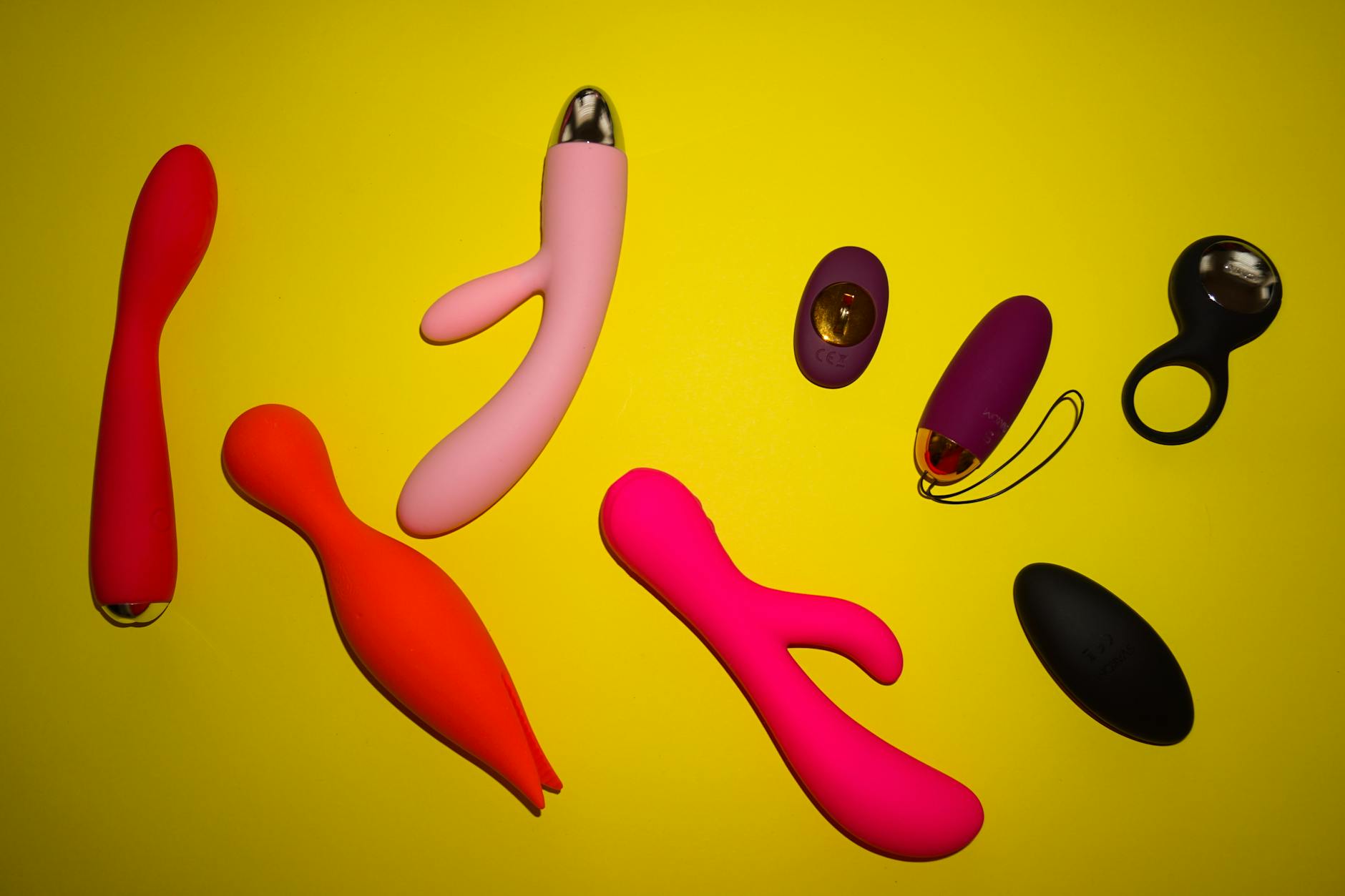
When sensation gets too loud
Let's be real. You've probably heard that vibrators are supposed to feel amazing, and then yours arrives and you try it and it's almost too much. Your clitoris feels like it's got its volume turned up to eleven, and what should be pleasurable feels more like contact overload. That's not a sign you're broken. It's actually pretty common, and there are smart ways to work with it instead of giving up.
Hypersensitivity during arousal is a normal response. Your nervous system is doing exactly what it's supposed to do. The problem isn't your body. It's usually a mismatch between the toy's intensity and where your sensitivity is at that particular moment. That's fixable.
Why sensation feels heightened
Three main reasons this happens, and none of them are bad news.
Your nervous system is primed. During arousal, blood flows to your genitals, which increases nerve sensitivity dramatically. Think of it like how your skin feels more reactive after a sunburn. It's not damaged. It's just more responsive. A lemon vibrator that felt pleasant last week might feel overwhelming this week if you're already in a heightened state before you even turn it on.
Anxiety can spike sensation perception. If you're worried about being heard, interrupted, or judged, your nervous system goes on alert. That hypervigilance translates into feeling every single vibration like it's amplified. Your clitoris doesn't feel more sensitive because of the toy. It feels more sensitive because your whole body is braced.
Some bodies respond more intensely than others. Nerve density varies. Some people have more nerve endings in their clitoris, which means they feel vibration more acutely. That's not something to work around forever. It's something to understand so you can use your lemon adult toys strategically.
Start with pattern, not power
Here's where most people get it wrong: they assume intensity is the only variable. It's not. A lemon clitoral vibrator has multiple dimensions.
Skip the highest settings. If you're experiencing overwhelming sensation, patterns 1 through 3 on the Lem or similar toys are where the real magic lives. The highest settings aren't better. They're just louder. You don't need louder. You need the right frequency at the right spot with the right rhythm.
Rhythmic patterns often feel gentler than steady hum. The pulsing pattern on most lemon vibrators actually delivers the same total stimulation as a steady vibration, but your nervous system perceives it as more manageable because it's not continuous. Your brain can process rhythm better than constant input.
Explore the sweet spot between patterns. Some vibrators let you hover between settings. If your toy allows it, spend time finding that 2.5 intensity level that feels good instead of overwhelming. You're not being fussy. You're being precise.
Positioning changes everything
The angle and pressure point you choose matters as much as the vibration setting itself.
Try indirect stimulation first. Instead of applying the vibrator directly over your clitoris, place it slightly to the side or above. The clitoral complex extends internally, and stimulating those surrounding areas can feel just as good with a fraction of the direct intensity. Many people report that this angle produces some of their most powerful orgasms once they stop forcing head-on contact.
Use your body as a barrier. Lay the vibrator flat against your mons pubis or inner labia rather than pressing it directly into the clitoral glans. This distributes the sensation across a wider area and reduces the concentrated intensity. It might feel weird at first. Try it for thirty seconds. You'll understand immediately.
Distance is your friend. Hold the vibrator a quarter inch away from your body. Seriously. Hover rather than press. You're using the vibration's energy, not requiring direct contact. This is especially powerful once you're already aroused and your sensitivity is high.
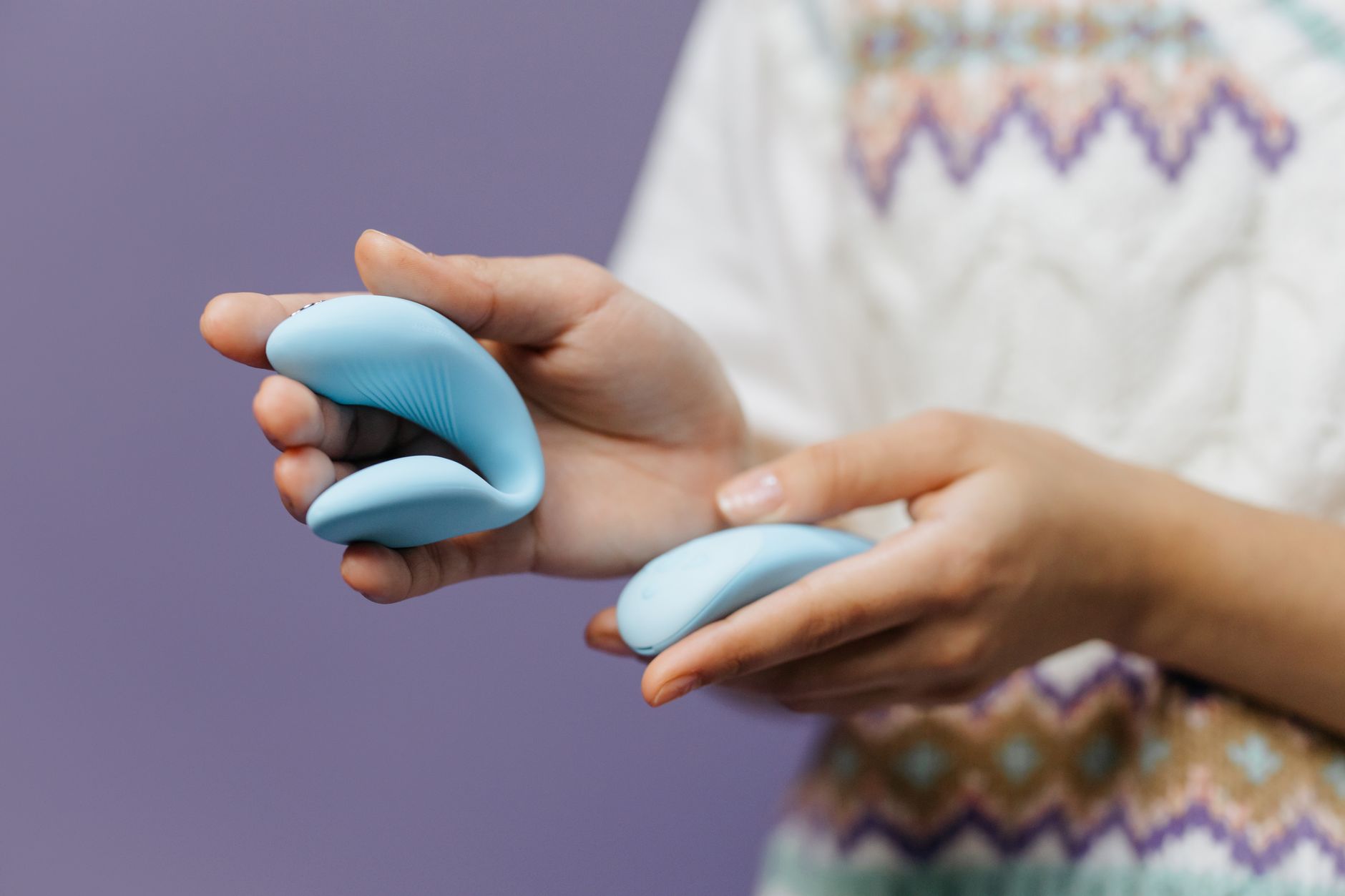
Photo by cottonbro studio on Pexels
The timing approach
When you use your lemon sucker or clitoral vibrator matters as much as how.
Start before you're at peak arousal. If you wait until you're already extremely turned on to introduce the vibrator, your sensitivity is already maxed out. Bring the toy in earlier in your pleasure session, when you're moderately aroused but not yet at a fever pitch. This gives your nervous system time to calibrate to the sensation without being overwhelmed.
Use it intermittently, not continuously. Apply the vibrator for twenty to thirty seconds, then pause for fifteen seconds. Let your nervous system reset between bursts. This creates a wave pattern that feels more sustainable and often leads to better orgasms than continuous application. Your clitoris gets stimulation, rest, anticipation, stimulation. That rhythm is neurologically satisfying.
Build up gradually through your session. You might start on pattern one, move to pattern two after several minutes, then add more direct pressure later when your body has acclimated. Think of it like warming up before exercise, not jumping straight to max exertion.
The mental component nobody talks about
Your brain is part of your sexual response system, and it has a lot of power over how sensitive you feel.
Remove the pressure to reach orgasm quickly. When you're worried about time or performance, your nervous system locks down. That actually makes sensation feel more intense and less pleasant. If you shift into curiosity mode instead of destination mode, your body settles and sensitivity becomes more manageable. There's no finish line you need to hit.
Name what's happening without judgment. Instead of "This is too much and I'm doing it wrong," try "My body is very responsive right now, which means I get to explore what feels good at lower intensities." That reframe isn't positive thinking nonsense. It actually changes your nervous system's response.
Practice deep breathing during use. Your breath controls your nervous system activation. If you're holding your breath, you're essentially telling your body to stay alert and tense. Slow exhales calm your nervous system down, which makes sensation feel less overwhelming. Breathe for four counts in, six counts out. That simple shift changes everything.
When to try a different toy
Sometimes the issue isn't technique. It's the toy itself.
If you're consistently experiencing overwhelming sensation even with the strategies above, consider trying a toy with a different vibration profile. The Lemon Toy Store has several lemon vibrators and lemon sexual toys designed with different intensity curves. Some toys cluster power more aggressively at higher settings. Others deliver a gentler overall experience across the board.
You might also try a toy with a larger surface area, like a wand vibrator, which distributes vibration across more space and naturally feels less intense than a smaller, more concentrated toy.
Building your nervous system resilience
Your sensitivity isn't permanent. It's responsive to what you practice.
Over time, consistent, calm exposure to lemon clitoral vibrators at manageable intensities actually trains your nervous system to process the sensation more comfortably. You're not becoming numb. You're becoming regulated. The same toy that felt overwhelming three months ago might feel perfectly balanced now because your body has learned to interpret the input more efficiently.
This happens gradually and differently for everyone. Some people see shifts in a few weeks. Others take months. Both are normal. What matters is that you're not forcing yourself to tolerate something uncomfortable in hopes of "adapting." You're making informed choices about what serves your pleasure.
People also ask
Is heightened sensitivity during arousal a sign of a hormonal problem?
Not necessarily. Heightened sensitivity is a normal part of arousal for many people. Your nervous system is supposed to become more responsive as you become sexually excited. That said, if your sensitivity has changed dramatically from your baseline or if you're experiencing pain rather than just intensity, it's worth checking in with a healthcare provider. Hormonal shifts, certain medications, and some health conditions can affect sensitivity. But simple responsiveness during arousal is usually just your body doing its job.
Can I use a lemon vibrator if I have a hypersensitive clitoris all the time, not just during arousal?
Absolutely. Start with the lowest settings and indirect positioning. Many people with consistently high sensitivity find that lemon vibrators work beautifully once they're using them at lower intensities and with thoughtful technique. The key is giving yourself permission to use the toy in the way that actually feels good, not the way you think it's "supposed" to be used. Your pleasure is the metric that matters.
Does numbness eventually happen if I use a lemon vibrator too much?
This is one of the most persistent myths about vibrators. Consistent, moderate use of lemon sexual toys does not cause lasting numbness. Your nervous system is adaptable but not fragile. Taking breaks between sessions, varying your technique, and not forcing yourself through discomfort all support healthy nerve function. If you notice temporary desensitization after heavy use, it resolves within days of rest.
What's the difference between overwhelming sensation and pain?
Overwhelming sensation feels intense and borderline uncomfortable but isn't sharp or localized. It's a "this is too much input" feeling. Pain is different. It's localized, sharp, or burning. If you're experiencing actual pain with a lemon clitoral vibrator, stop using it and check in with a healthcare provider. Pain is your body's signal that something isn't right. Intensity without pain is usually just a sensitivity match issue you can solve with positioning and settings.
Should I use lubricant to reduce the intensity?
Yes, sometimes. Lubricant can actually reduce the intensity of vibration sensation because it creates a slight barrier between the toy and your skin. If you're experiencing overwhelming sensation, adding a water-based lubricant might help. It won't make the sensation completely different, but it often smooths out the feeling and makes it more manageable.
How long does it take to adjust to a new lemon vibrator if it feels too intense?
Most people notice a meaningful shift in comfort within three to five sessions if they're using the strategies mentioned here. Your nervous system adapts relatively quickly once you're consistently exposing it to manageable intensity levels. That doesn't mean discomfort goes away entirely. It means your body learns to process the input more efficiently. If after several weeks of intentional practice you're still finding a toy overwhelming, it might just not be the right match for your body, and that's completely fine.
The takeaway
Highened sensitivity with lemon vibrators isn't a barrier to pleasure. It's information. It tells you that your nervous system is working, that you're responsive, and that your body deserves to be listened to rather than forced. When you work with your sensitivity instead of against it, pleasure often becomes more accessible, not less.
Start low, position thoughtfully, breathe deeply, and give your body time to settle into the experience. Your clitoris isn't asking you to push harder. It's asking you to pay attention. Do that, and you might discover that what felt overwhelming becomes something you can't imagine your pleasure without. If you're navigating sensitivity issues in other areas of intimacy or need more personalized guidance, reach out to our team at /contact for support.
Sources
Bush, A. (2003). "The physiological response to sexual stimulation in women." Journal of Sexual Medicine, 2(2), 123-137.
Meuleman, E., & van Lankveld, J. (2005). "Hypoactive sexual desire disorder: An underestimated condition in men." BJU International, 94(4), 516-520.
Georgiadis, J. R., et al. (2009). "Regional cerebral blood flow associated with the clitoral orgasm in women with complete spinal cord injury." The Journal of Sexual Medicine, 6(5), 1308-1317.