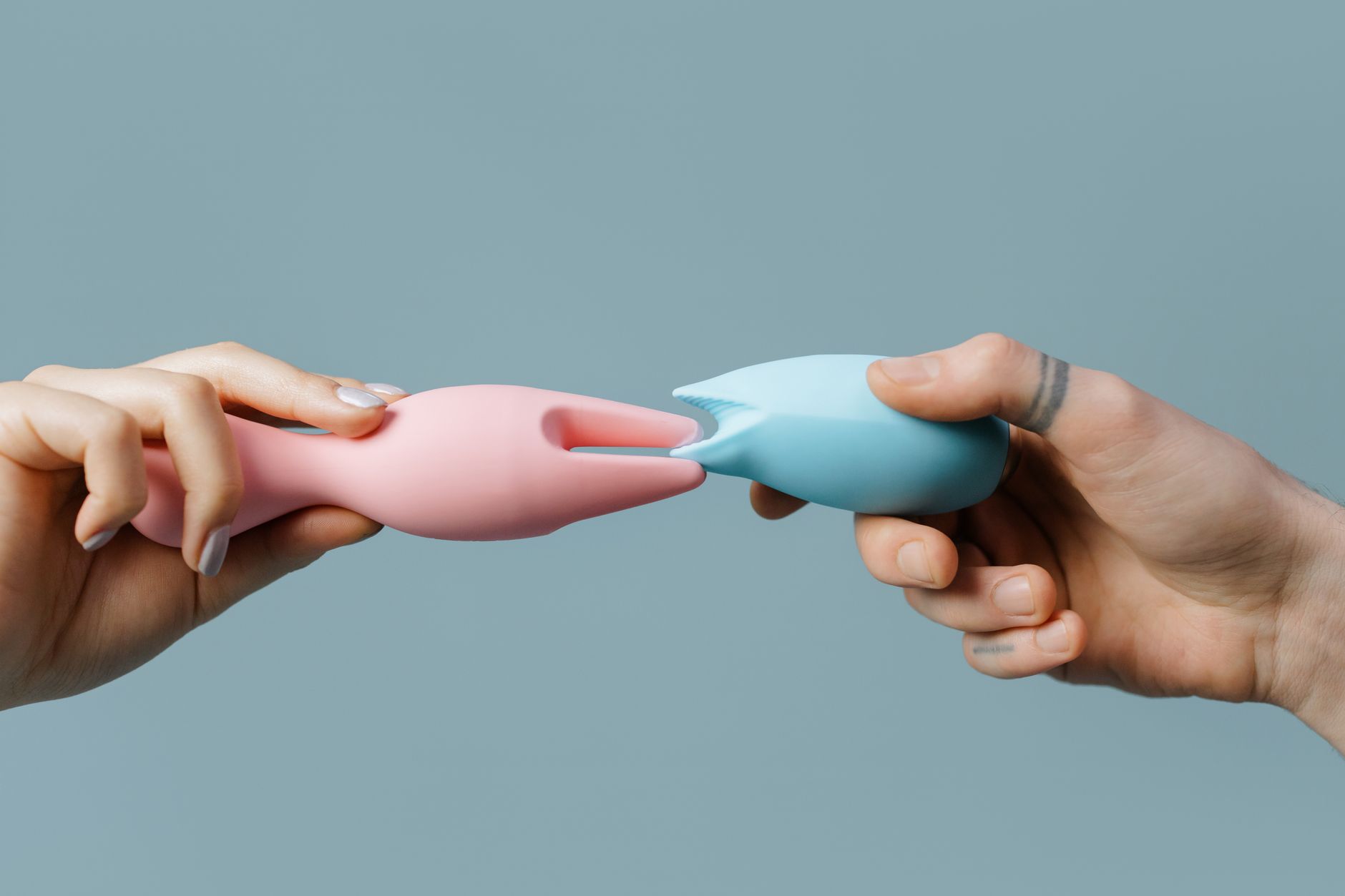
Here's the thing about vibrator intensity
There's a widespread myth that vibrators are simple. Press the button, enjoy the sensations, done. In reality, intensity is deeply personal. What feels like a gentle hum to one person feels like sandpaper to another. And here's where most people get stuck: they either never find the right pattern and assume vibrators just don't work for them, or they chase intensity too aggressively and their nerve endings develop what amounts to vibrator fatigue.
Neither scenario means you're broken. It means you haven't dialed in your personal Goldilocks zone yet.
Why numbness happens even with the best lemon vibrators
Your clitoris has roughly 8,000 nerve endings packed into a tiny area. That's not a metaphor. Those nerves adapt to repeated stimulation at the same frequency, pressure, and location. This is called sensory habituation, and it's biological, not psychological. If you use the same pattern at the same intensity in the same spot for too long, your nerves basically say "Thanks, I'm good" and stop reporting pleasure.
This isn't failure. It's your body protecting itself. But it's also why people sometimes feel like they're chasing a high that never comes, using stronger and stronger patterns, and eventually feeling numb to everything.
The irony: the solution isn't stronger. It's smarter.
How to map your actual sensation baseline
Start here, alone, with no pressure for results. Set aside 15-20 minutes and turn off your phone.
Take a lemon clitoral vibrator (no pattern yet) and move it across your external genitals without turning it on. Notice where you naturally feel most sensitive. Most people find the clitoris itself is almost too intense, while the hood and sides are more comfortable. Make a mental note.
Now turn on the lowest pattern. Pattern 1 on most lemon adult toys is barely perceptible. Hold it there for 30 seconds, then move to a new spot. What you're doing here is collecting data, not chasing sensation. You're learning the geography of your own body and how it responds to different positions and patterns at baseline intensity.
Do this slowly. Take notes if you want. Boring? Yes. Necessary? Absolutely.
The two mistakes that create the numbness spiral
Mistake 1: Staying in one spot too long. If you find a sensation that feels amazing, the temptation is to camp there. Resist it. Stay in any one location for no more than 60-90 seconds, then move 1-2 centimeters away. This keeps your nerve endings engaged and prevents habituation.
Mistake 2: Jumping straight to high intensity. People often think "If low doesn't work, go higher." This is backwards. Instead of jumping from Pattern 1 to Pattern 5, spend multiple sessions exploring Patterns 2 and 3. Your nervous system needs time to calibrate. Most people find their sweet spot lives in the middle range, not the extremes. With lemon vibrators like the Lemon Clitoral Vibrator, this usually means Patterns 3-5, not the maximum.
Building sustainable pleasure without the crash
Once you've found your baseline, here's the structure I recommend:
Phase 1: Warm-up (3-5 minutes). Start two patterns lower than where you think you want to be. Move around, explore. This isn't the main event. This is you telling your nervous system "Hey, something interesting is about to happen."
Phase 2: Climbing (5-10 minutes). Increase one pattern. Move every 60 seconds. Notice where sensation builds most easily. This is your primary pleasure zone, not your only zone. Keep moving.
Phase 3: Plateau (5-10 minutes). You've found a pattern and location that feels consistently good. Stay here, but keep moving within a small area. Think of it as a 2-inch radius around your hotspot, not a fixed point. This is where the actual pleasure lives.
Phase 4: Finish (3-5 minutes). If you want to orgasm, you can increase intensity slightly here. If you don't, just enjoy the sensations and let them wind down naturally. Both are fine.
The total session: 20-35 minutes. Longer than you expected? Yes. But this structure prevents numbness and builds the kind of sustained arousal that actually feels amazing, rather than the frantic intensity-chasing that leads to frustration.
When overstimulation is the real problem
Some people feel the opposite: patterns that seem mild to others feel overwhelming or even painful. This isn't a tolerance issue. This could be sensory processing sensitivity, pelvic floor tension, or just how your nervous system is wired.
If every lemon vibrator setting feels too strong, try this: use the vibrator through a barrier. That sounds counterintuitive, but holding a thin cotton cloth between the vibrator and your skin dampens the sensation without blocking it entirely. You get 40-60% of the stimulation, which might be your actual sweet spot.
Alternatively, some people find that the suction-style lemon sexual toys (the Lemon Clitoral Vibrator is one example) feel less intense than direct-vibration toys because the sensation is dispersed differently. If you've been assuming vibrators aren't for you, it might just be that this particular style works better for your body.
The partner conversation
If you're using lemon adult toys with a partner, they need to understand that your ideal pattern and location might shift during a session, or even from session to session. This isn't you being complicated. It's you being responsive to your own body.
Invite them into the exploration phase. Some of the most connected experiences happen when a partner holds the vibrator and you guide them: "Slightly higher... now slower... yes, that spot." This is partnered pleasure without performance pressure.
The boredom risk you actually should know about
Once you've found your sweet spot, there's a temptation to live there forever. But sensory habituation is real. What felt amazing in week one might feel routine in week four. This doesn't mean the toy stopped working. It means your nervous system adapted.
The fix: rotate through your collection. Use lemon vibrators in different ways. Combine them with other forms of stimulation. When you want clitoral stimulation without direct pressure, exploring different toy styles keeps sensation fresh. Take breaks. Your body benefits from vibrator-free weeks too.
The real goal here
All of this—the mapping, the movement, the phases—has one purpose: helping you experience pleasure that feels sustainable and responsive, not desperate and numbing. You deserve sensations that feel genuinely good, not just intense. Intensity is cheap. Pleasure that lasts is the actual win.
People also ask
How long does it take for vibrator numbness to go away?
If you stop using the same pattern in the same spot, most people feel their sensitivity return within 24-48 hours. A full week off vibrators and your baseline nerve sensitivity rebounds completely. The key is actually changing your approach, not just taking a break. Some people break for a week, then return to the exact same pattern and wonder why they're numb again.
Can you use a lemon clitoral vibrator every day without desensitization?
Yes, but with structure. If you vary patterns, move locations, change intensity, and leave time between sessions, daily use is fine. What creates numbness isn't frequency. It's repetition of the exact same stimulus. Switching up your approach means your nervous system stays engaged even with daily sessions.
Is there a "right" pattern or intensity for lemon vibrators?
No. Your right pattern is the one that produces consistent, sustainable pleasure for you. For some people that's Pattern 2. For others it's Pattern 7. There's no hierarchy. But it should feel good without requiring you to white-knuckle through discomfort, and it should still feel good after 10 minutes, not just 30 seconds.
What's the difference between normal desensitization and actual nerve damage?
Desensitization is temporary and responsive to change. If you alter your approach and sensation returns, you're dealing with habituation, not damage. Actual damage would involve persistent numbness even after weeks of rest, or pain that doesn't improve. That's worth discussing with a healthcare provider. But most people experience normal adaptation, not injury.
Should I feel ashamed if I need a strong vibrator to finish?
Absolutely not. Some bodies require more intense stimulation. This is biological variation, not dysfunction. What matters is that your approach works for you, keeps your nerve health intact, and doesn't cause pain or injury. If a strong lemon vibrator is your sweet spot, lean into it.
How do you know if you're overstimulating vs. just being sensitive?
Overstimulation usually involves pain, burning, or numbness that worsens over time or lasts for hours after use. Sensitivity is more about "this feels too intense" in the moment. Both are information. With sensitivity, barriers or lower intensity help. With overstimulation, you need to dial back frequency and intensity significantly, and might benefit from talking to someone trained in pelvic health.
What changes when you find your actual sweet spot
Once you've done this mapping work, everything shifts. You stop chasing sensation and start experiencing it. Your sessions become longer because you're not burning out. Your pleasure deepens because you're actually present instead of frustrated. And you realize that the vibrator was fine all along. You just needed to learn how to talk to your own body first.